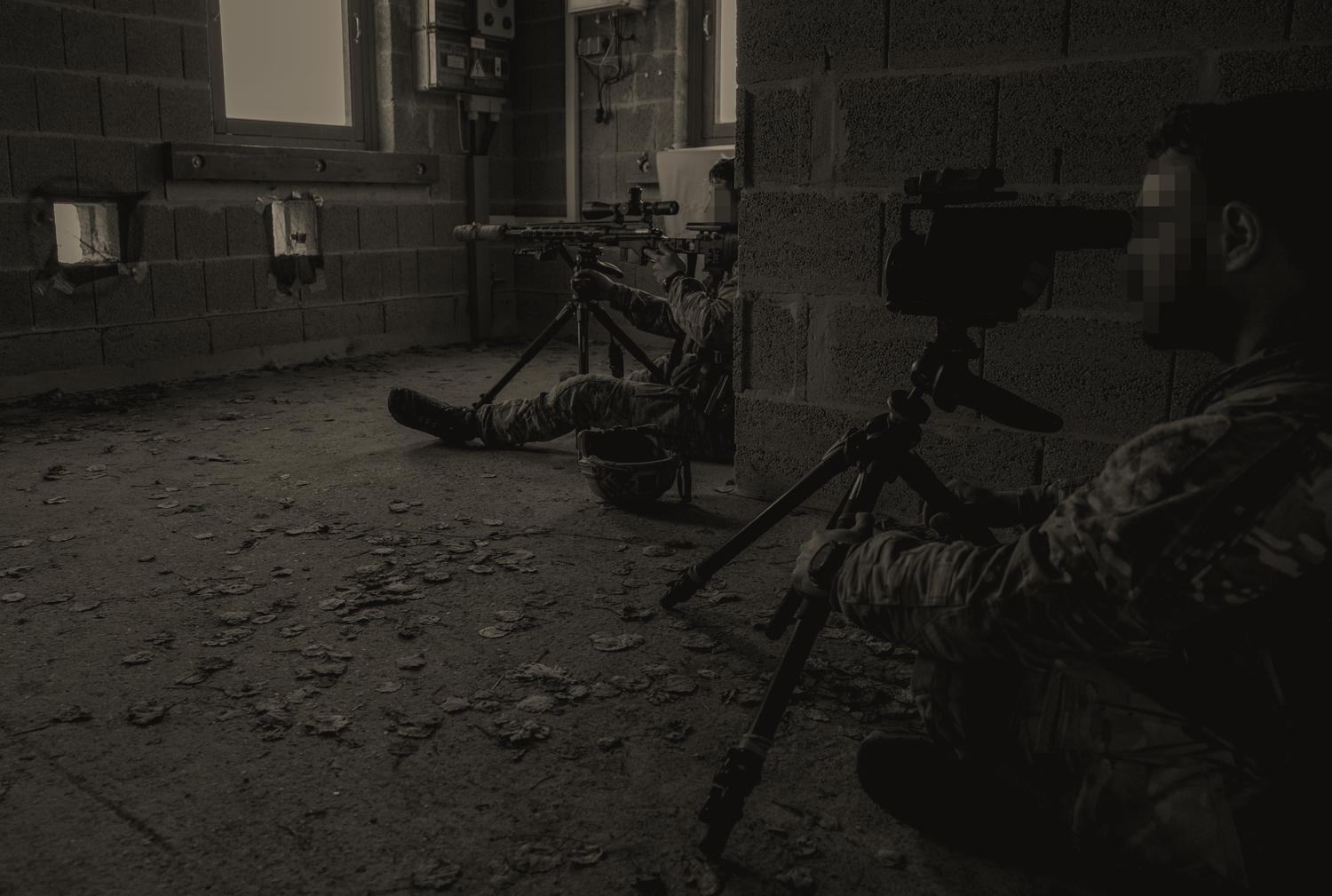
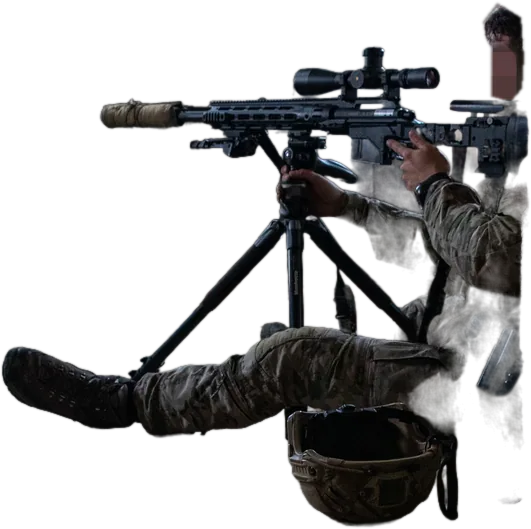
NEGATIVE SPACE SEGMENT ONE
Contents

History of the Urban Sniper

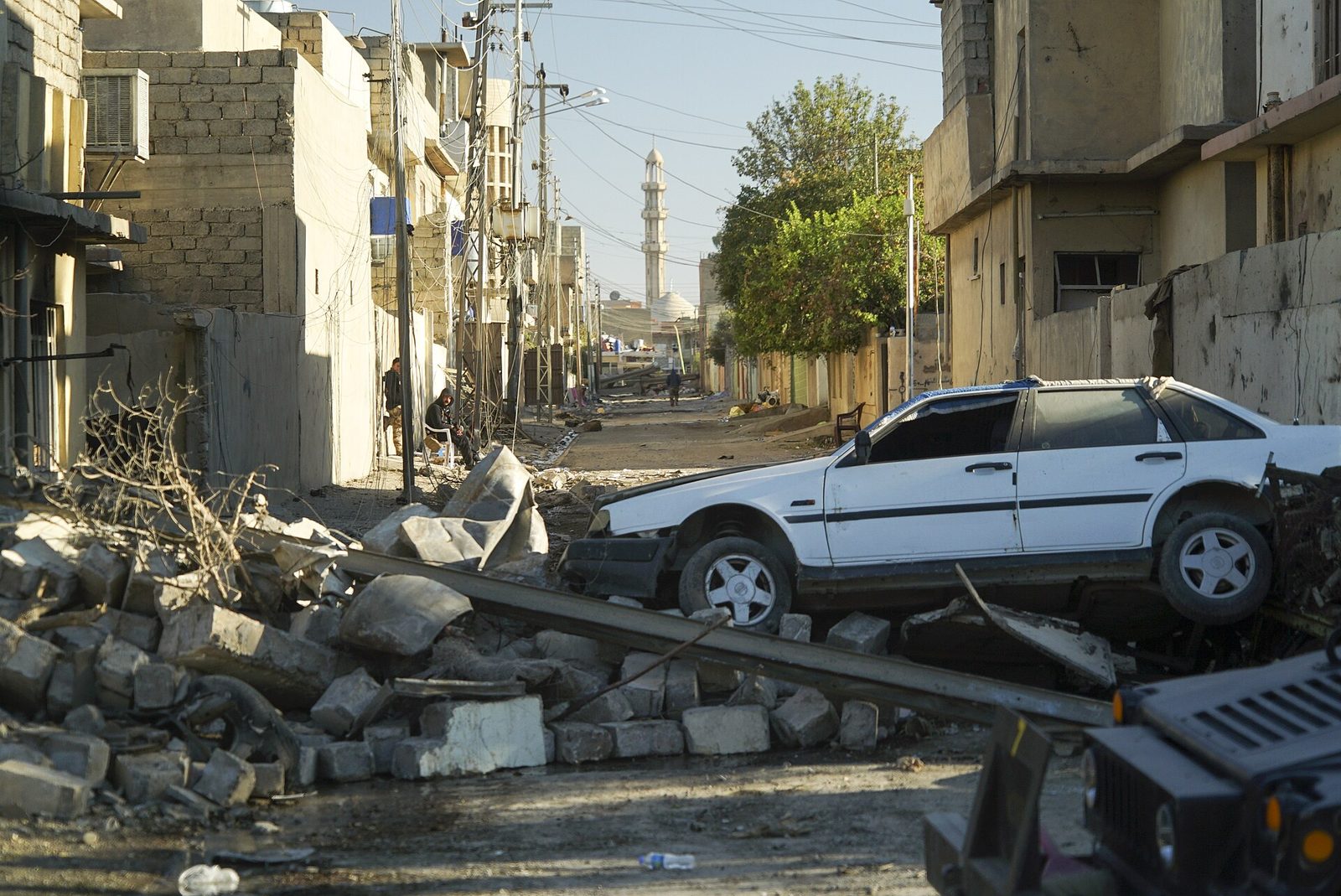
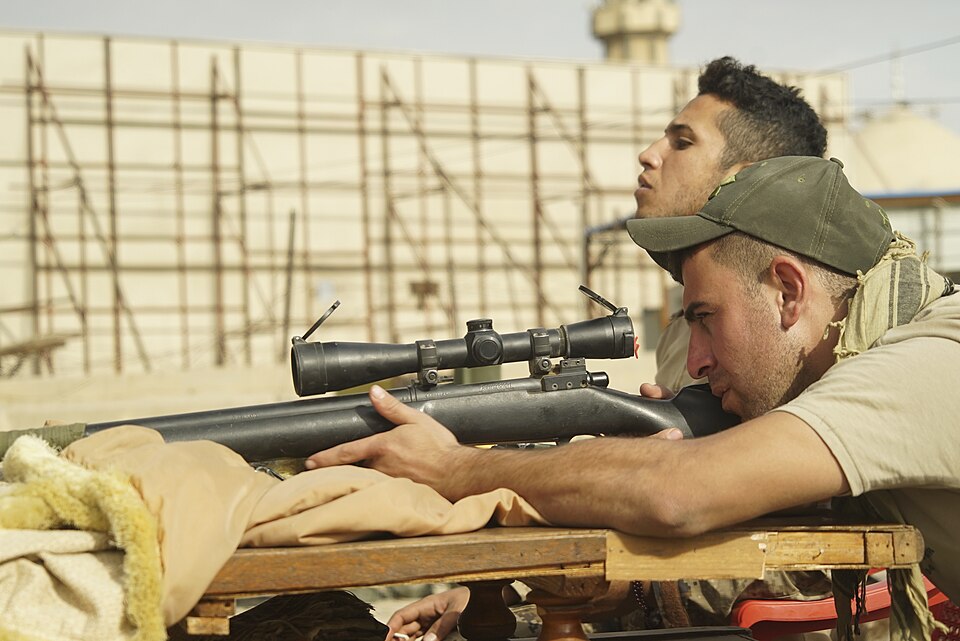
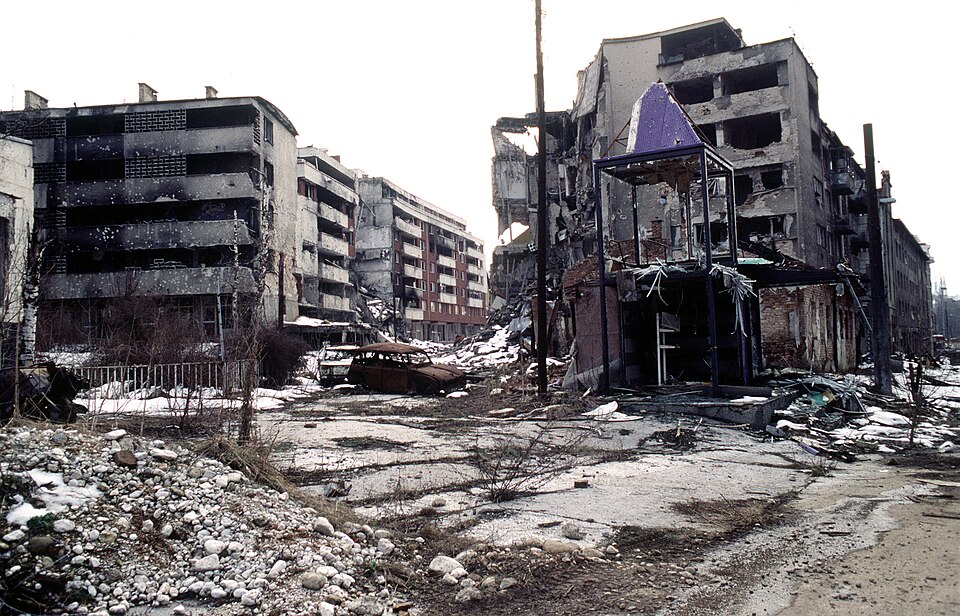
In 1942, Russian and German snipers fought through the factories of Stalingrad. In 1966, a lone gunman fired from a university tower in Austin. Over the three decades that followed, snipers operated in Hue, Beirut, South Armagh, Sarajevo, and Grozny. In 2002, two men fired through a hole cut in a car trunk across the Washington, D.C. suburbs. They fired from apartment windows, rubble, derelict houses, and modified vehicles. In most cases, no one saw the shooter.

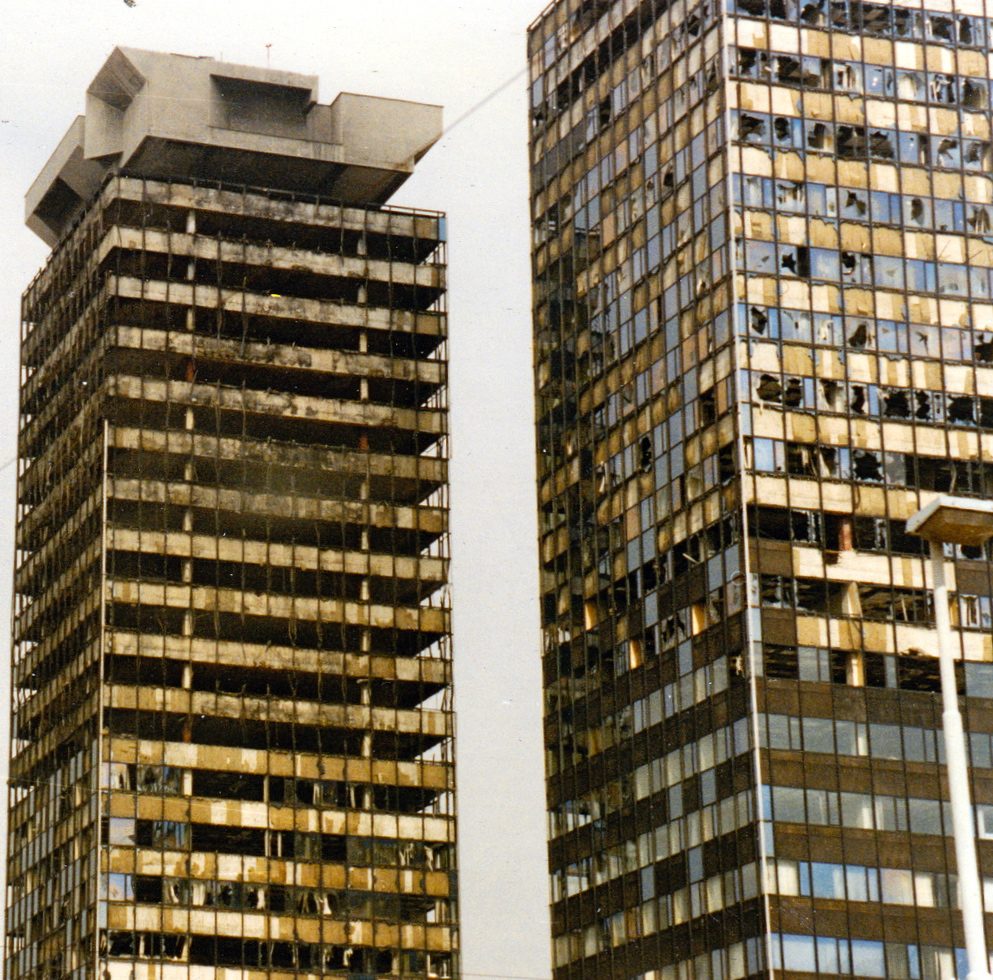
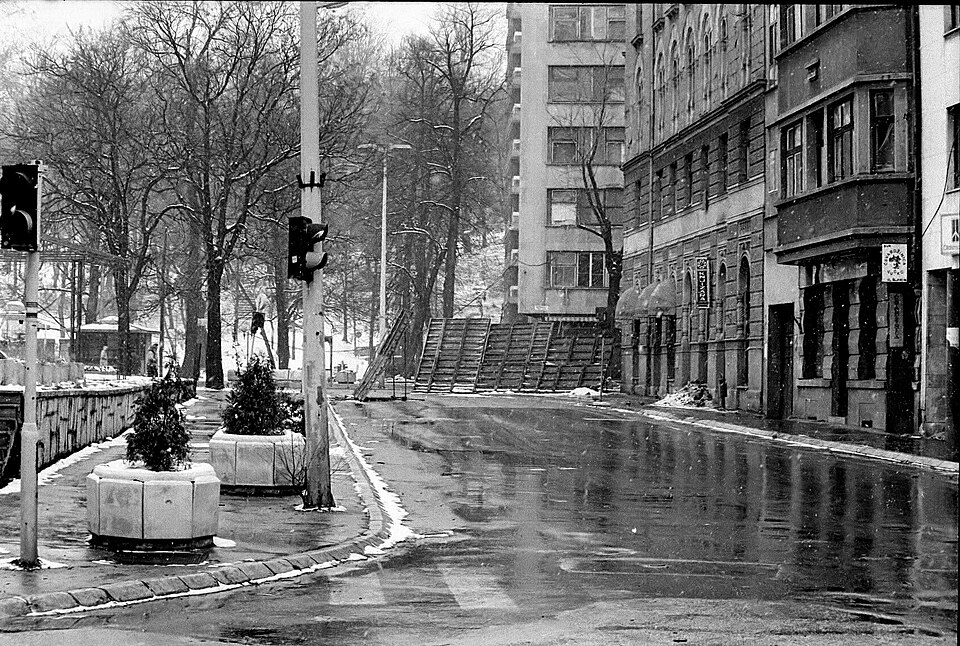
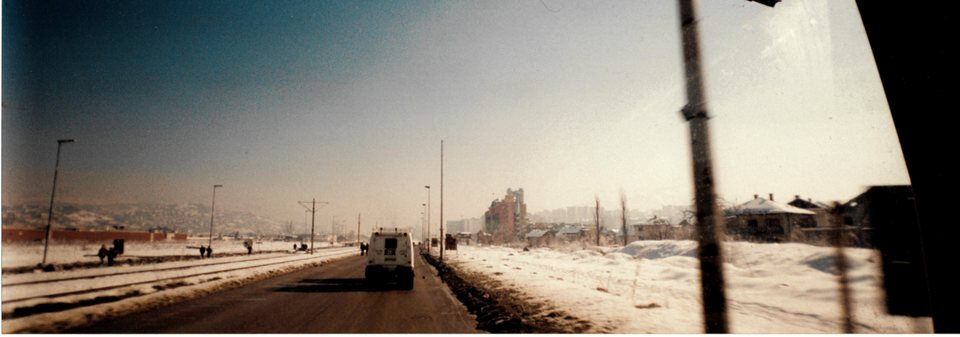
The Holiday Inn and Zmaja od Bosne street in Sarajevo, known as Sniper Alley
Sarajevo · Zmaja od Bosne

The negative space

Bosnia declared independence from Yugoslavia in March 1992. On 6 April, thousands of Sarajevans gathered on the boulevard outside the Parliament building to demonstrate for peace.

The Holiday Inn, a ten-story yellow building where foreign journalists and Bosnian Serb officials were staying, stood across the street. Gunmen inside opened fire on the crowd, wounding at least a dozen people.2 The crowd rushed the building, swarmed through the floors, and found a man in the cellar with a rifle.2

For 1,395 days, snipers in the towers and apartment blocks of Sarajevo shot civilians crossing streets, riding trams, collecting water, attending funerals.10

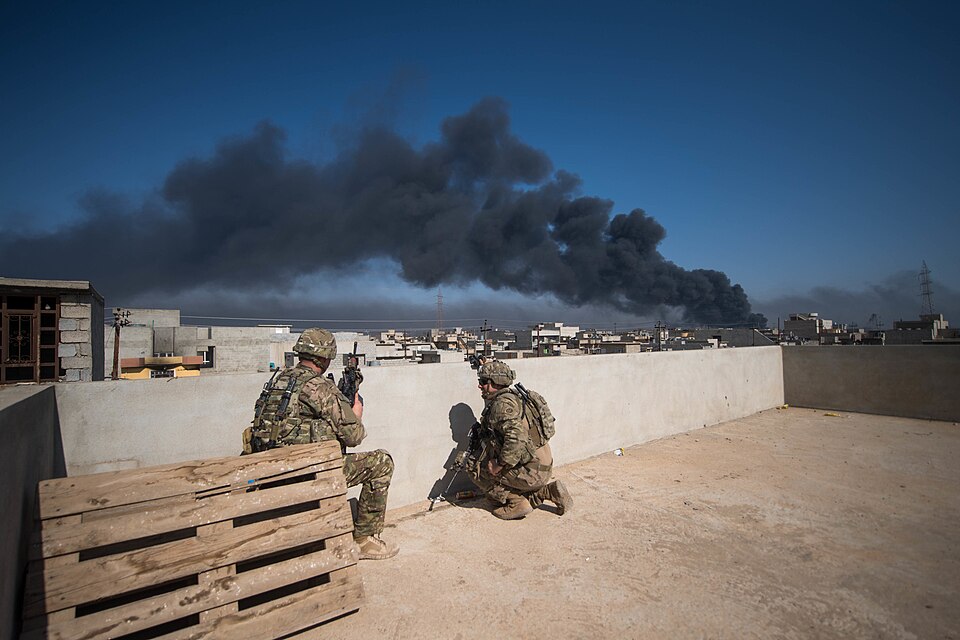
In a built-up area, closely packed buildings cut ground-level observation and fields of fire to less than 100 yards.1 Three movement routes existed only in cities: underground through sewers and subways, at surface level through buildings, and above ground through walls. Mouseholing, the technique of blowing holes between adjacent buildings, was used by the Germans at Stalingrad and by both sides in every urban battle that followed.1

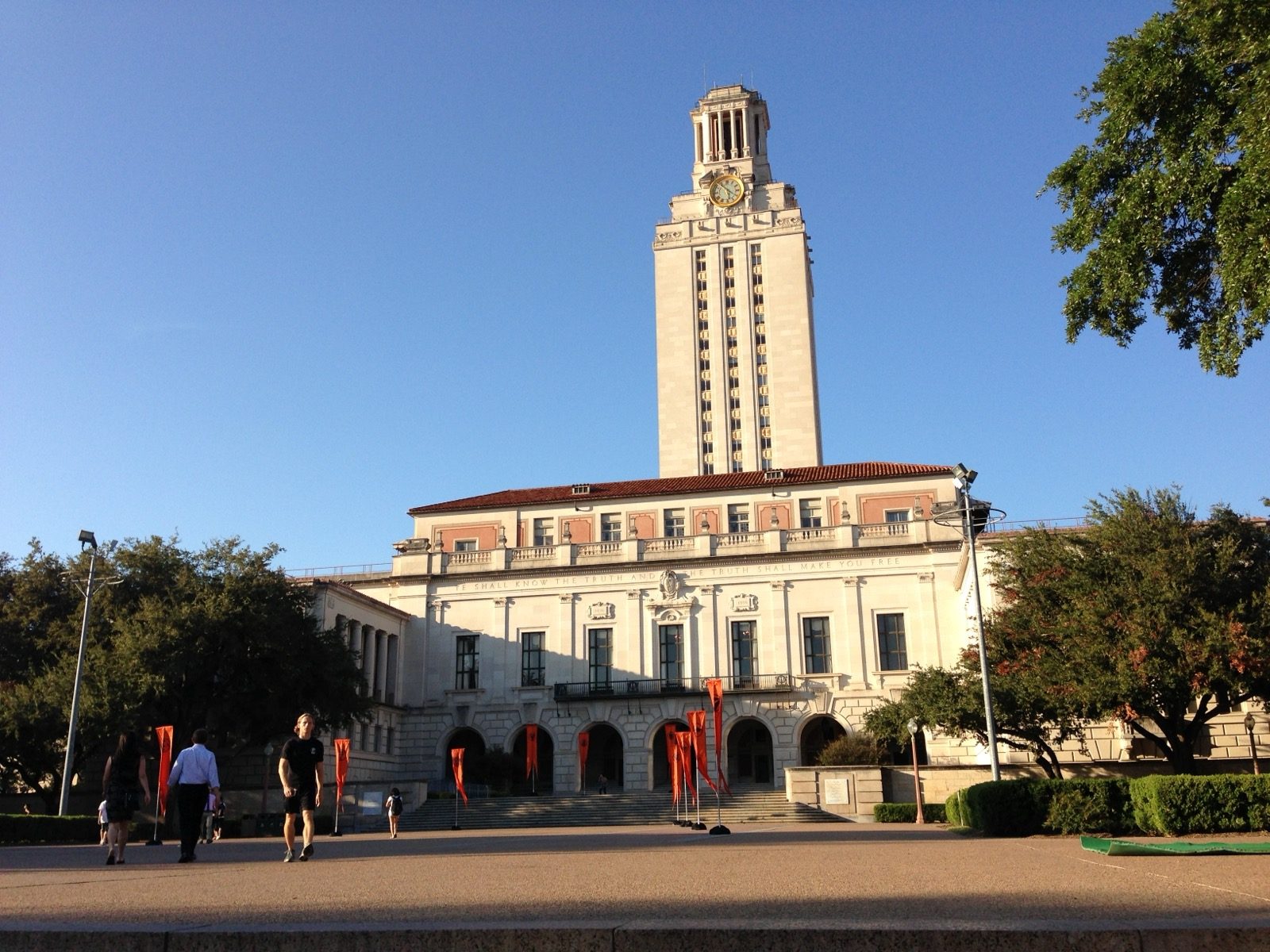
Concealment in a city did not look like concealment in the field. Charles Whitman walked to the observation deck of the University of Texas tower in 1966 wearing coveralls. “To the surrounding people he looked like a janitor.”2 Vasily Zaitsev was a naval payroll clerk before he became a sniper at Stalingrad.2 The IRA sniper team in South Armagh fired from the back of a modified Mazda 626 hatchback.11 John Allen Muhammad and Lee Boyd Malvo fired through a hole cut in the trunk of a 1990 Chevrolet Caprice.8

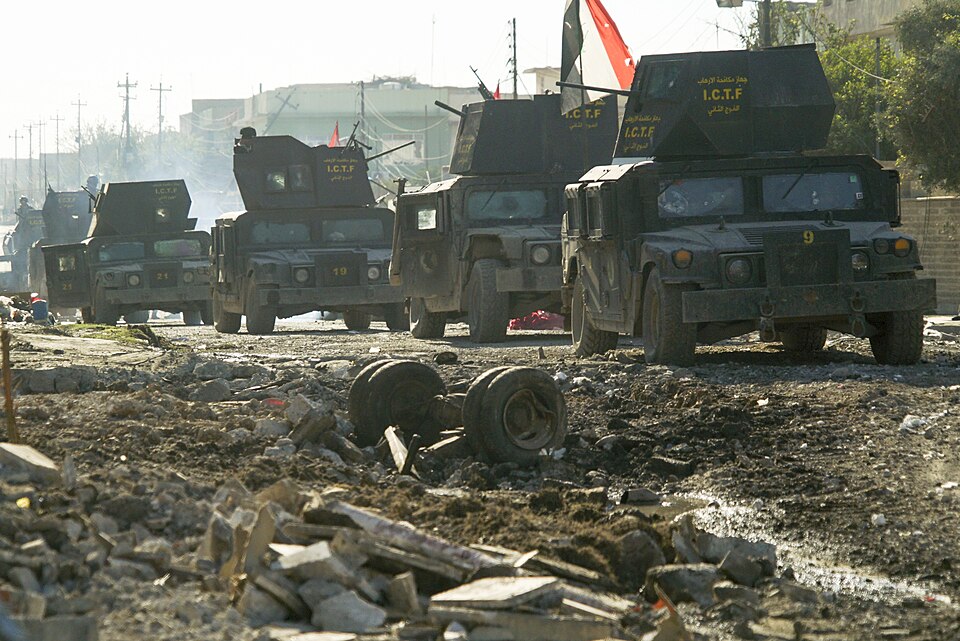
In Baghdad in 2006, an insurgent sniper cell filmed its own attacks from modified vehicles and released the footage as propaganda.2 The U.S. military deployed gunshot-detection systems and counter-sniper teams in response, and the shootings continued.2

Today, drones fly persistent surveillance over combat zones in Ukraine. CCTV and license plate readers track vehicles across entire cities. Mobile phones place a person at a specific location at a specific time. A concealed position that no camera, drone, or phone can observe is harder to find than at any point in the record. The rest of this series examines what that changes.

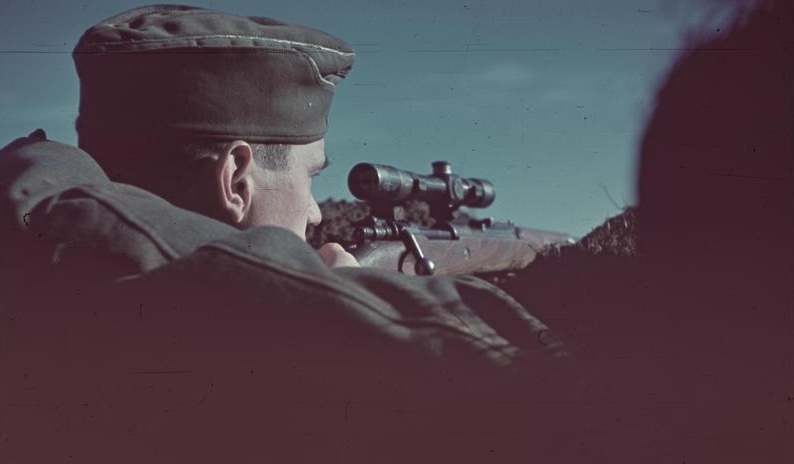
German sniper in position amid Stalingrad rubble, September 1942
Bundesarchiv · Stalingrad, 1942

Stalingrad, 1942

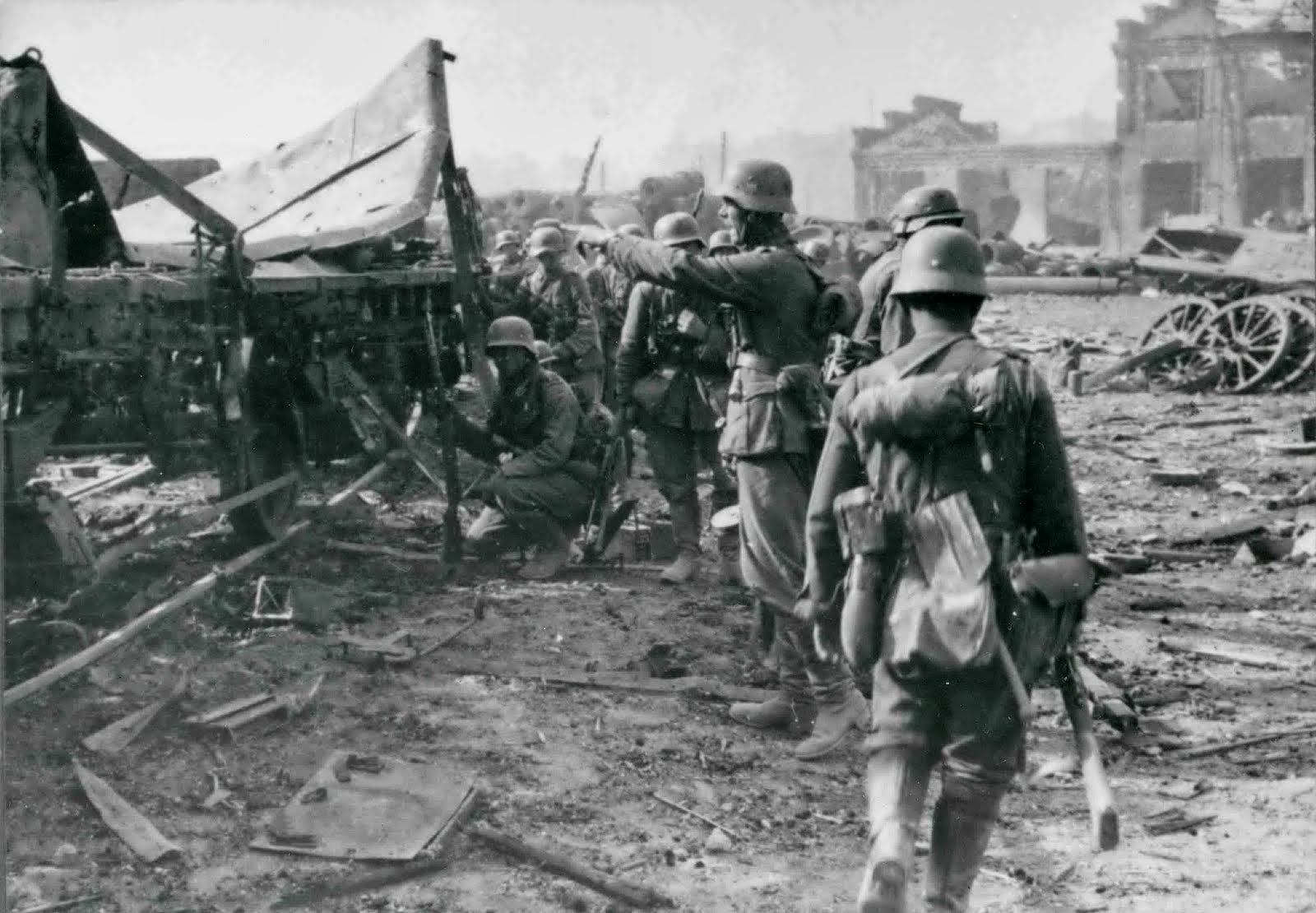
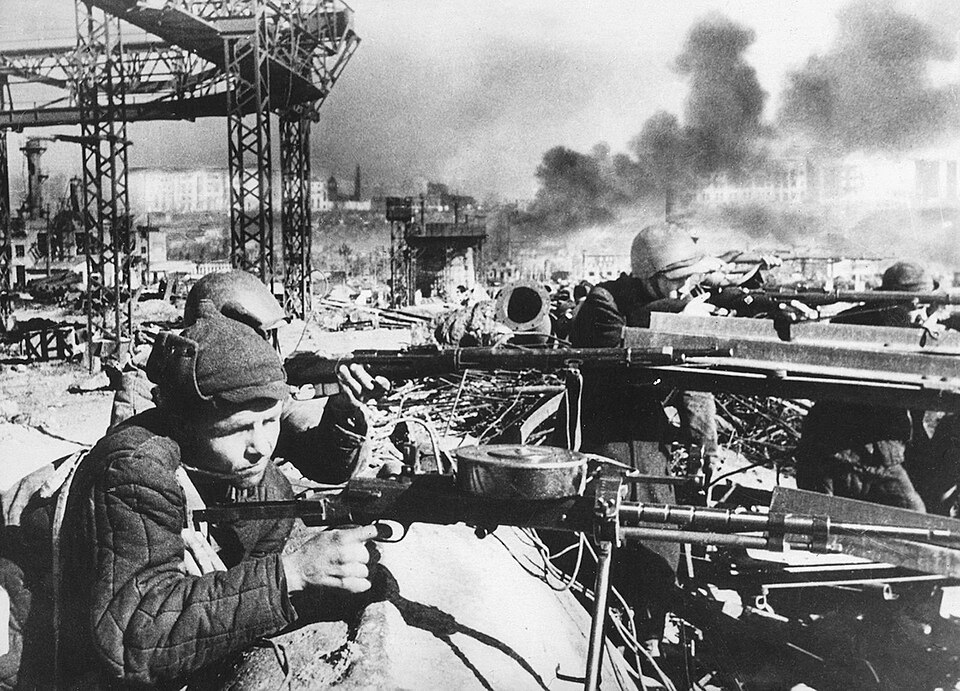
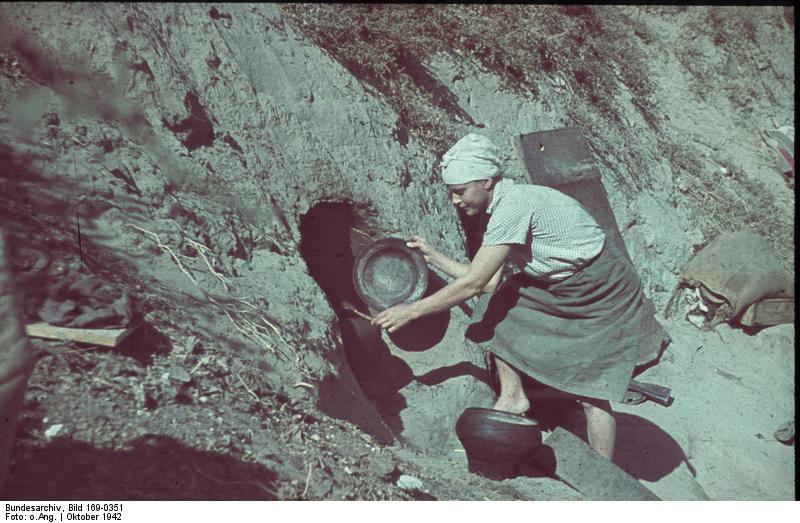
The battle of Stalingrad lasted from September 1942 to February 1943. The Luftwaffe bombed the city flat in the opening weeks. The pre-war civilian population of 850,000 fell to roughly 1,500 by the end of the battle.2

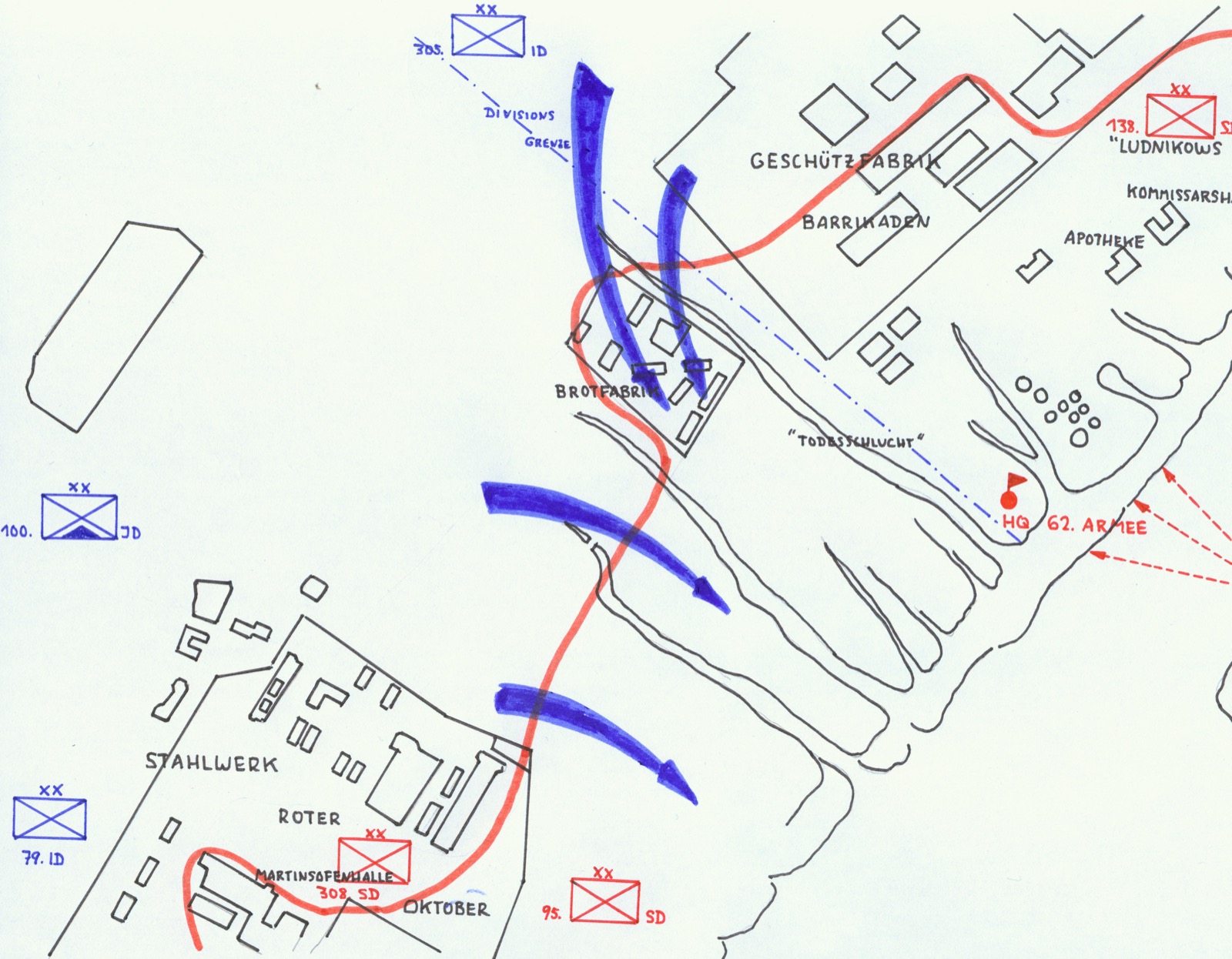
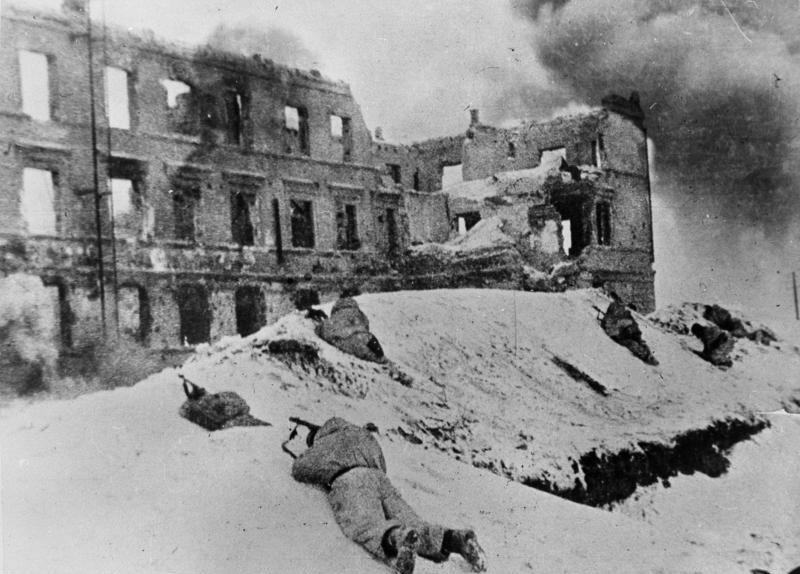
The bombing turned an industrial city into a landscape of rubble, collapsed factories, and gutted apartment blocks. Closely packed buildings cut ground-level observation and fields of fire to less than 100 yards.1 The factory district along the Volga, Barrikady and Krasny Oktyabr and the Lazur Chemical works, became the center of the fighting.

Hundreds of German soldiers died from sniper fire in the streets before the Sixth Army brought in its own snipers.5 The constant presence of shooters who could not be located forced the Germans underground. They called it Rattenkrieg: a war of the rats. The Soviets reinforced the pressure with propaganda. Loudspeakers broadcast across the German lines: “every seven seconds a German soldier dies in Russia.”2

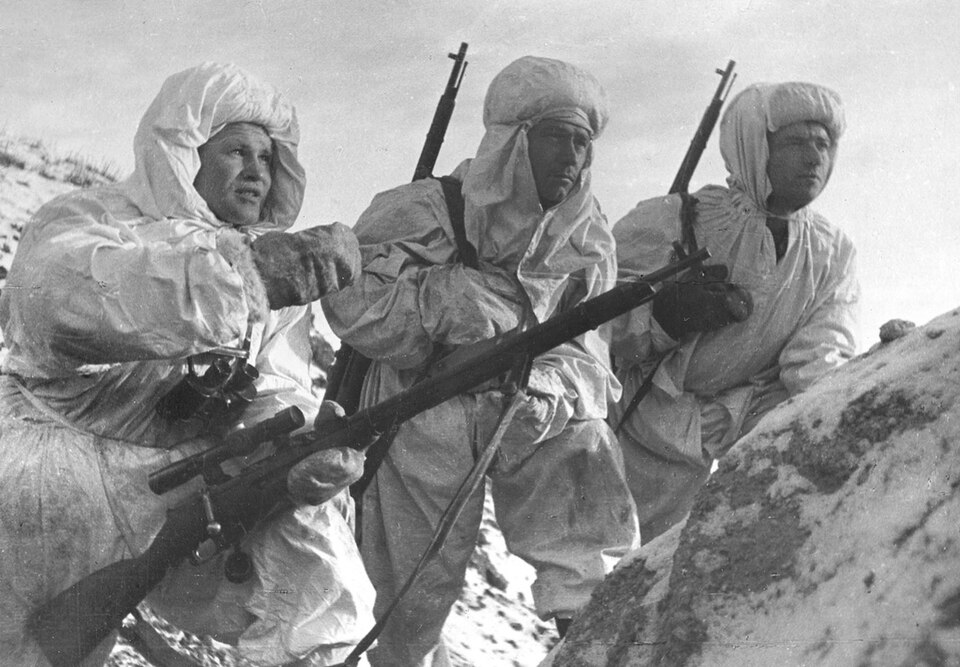
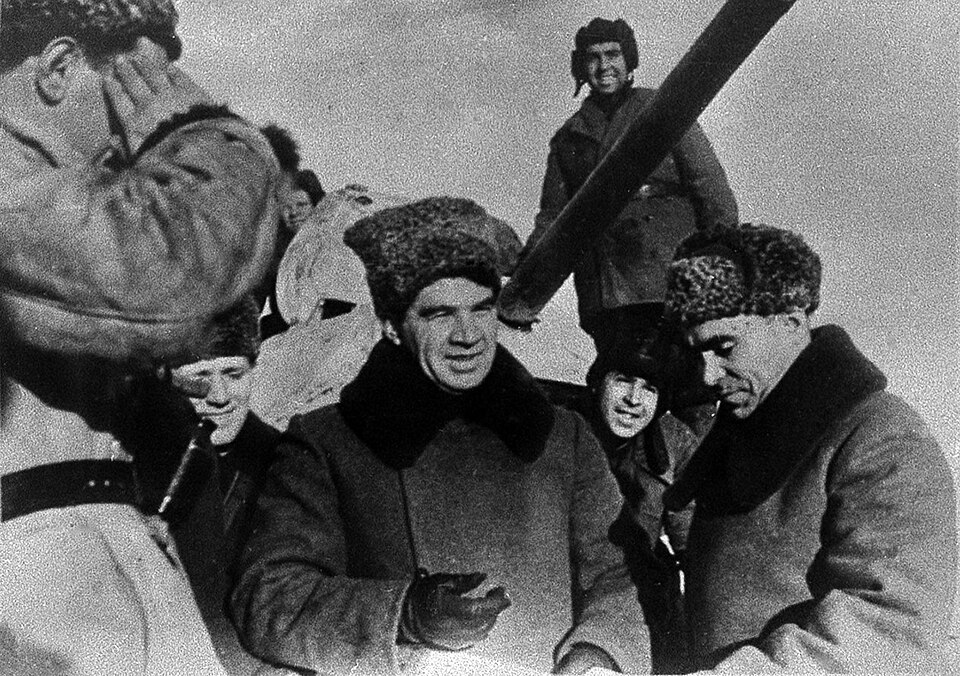
General Chuikov, commanding the 62nd Army, built a formal sniper program around Vasily Zaitsev, a naval payroll clerk and hunter from the Urals with no formal training. Zaitsev set up a sniper school at the Lazur Chemical Factory, bombed into a ruin by the Luftwaffe but still in Soviet hands. He built a rifle range inside one of the long industrial buildings and painted pictures of soldiers, helmets, and bunker slits on the wall as targets. Students received classroom instruction, then went on live missions.2

Snipers moved through air ducts, heating ducts, and empty petrol-yard pipes to reach their positions without crossing open ground. They bricked up windows in captured buildings to leave only a small port to fire through, a technique that carried forward from Stalingrad to Sarajevo to Iraq.2 They held factory smokestacks as elevated firing positions until the Germans brought up SIG33B assault guns and collapsed the chimneys with 150mm rounds.2

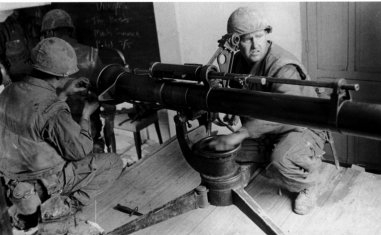
Both sides improvised heavy weapons for the role. Zaitsev tested a Soviet PTRD-1 anti-tank rifle (14.5mm) as a sniper weapon. A German soldier named Adelbert Holl used a captured PTRD-1 to kill a Soviet machine-gun crew through a wall.2

The German response

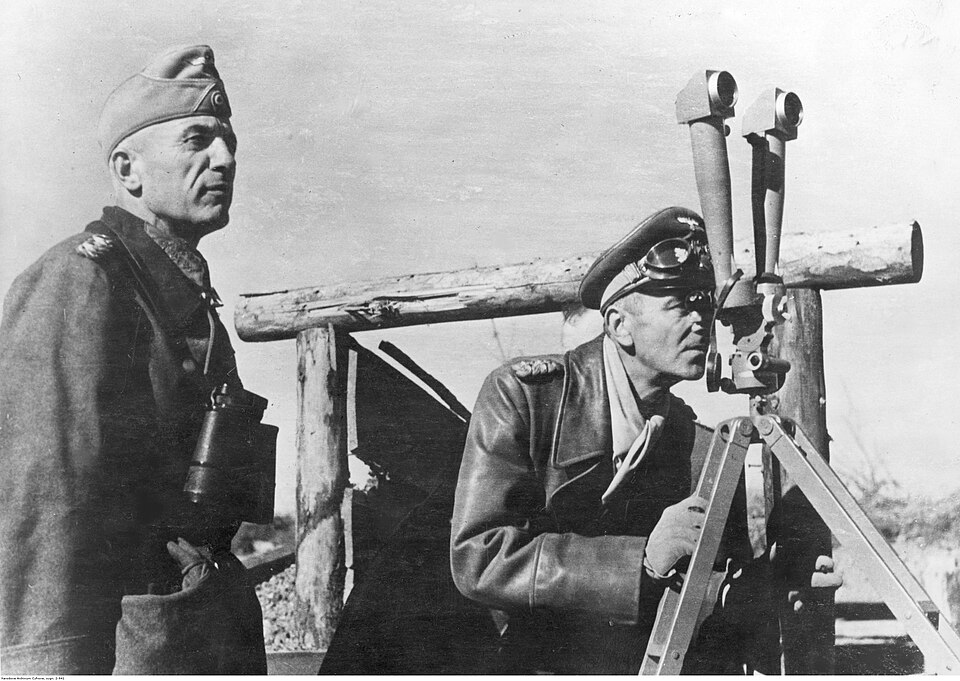
The answer both sides reached was the same: another sniper. The German 24th Panzer Division produced an after-action report titled “Experiences Fighting in Stalingrad.” Units with sniper support suffered lower casualties. German snipers interdicted a crossing between the Barrikady and Krasny Oktyabr factories that Soviet troops called the gully of death.2

The cycle that began at Stalingrad repeated in every case that followed: snipers created a problem that only snipers could answer.5 When the smokestacks were gone, snipers moved to rubble piles and bricked-up rooms. When the counter-sniper found one position, the shooter had already moved to the next. The Germans escalated to 150mm assault guns; the Soviets moved deeper into the ducts and pipes. Neither side found a way to end the threat without putting another trained shooter into the same terrain.

Zaitsev killed 242 Germans at Stalingrad. The snipers he trained accounted for over 3,000 German deaths according to Soviet wartime tallies.2 Viktor Medvedev was credited with 232 kills in five months. Nikolai Ilyin was credited with 95 kills in eleven days and awarded Hero of the Soviet Union in February 1943.18 These tallies were entered in unit logs and confirmed by a spotter, but the numbers were also used for propaganda. They should be treated as Soviet-era claims, not independently verified figures.18

The sniping at Stalingrad ended when the battle ended. The German Sixth Army surrendered on 2 February 1943. The Soviet sniper program survived. The techniques Zaitsev developed at the Lazur Chemical Factory, the bricked window, the concealed firing port, movement through internal routes, one shot and relocate, appeared in every urban battle that followed.

Three of those techniques carried directly into later cases in this segment. Mouseholing, blowing holes between adjacent buildings to move without crossing open ground, was used by the Germans at Stalingrad and by both sides in every urban battle after.1 Bricked-up windows for firing ports reappeared in Sarajevo and Iraq.2 The IRA deployed the Barrett .50 in South Armagh forty-eight years after Zaitsev tested the 14.5mm PTRD-1 at Stalingrad.2

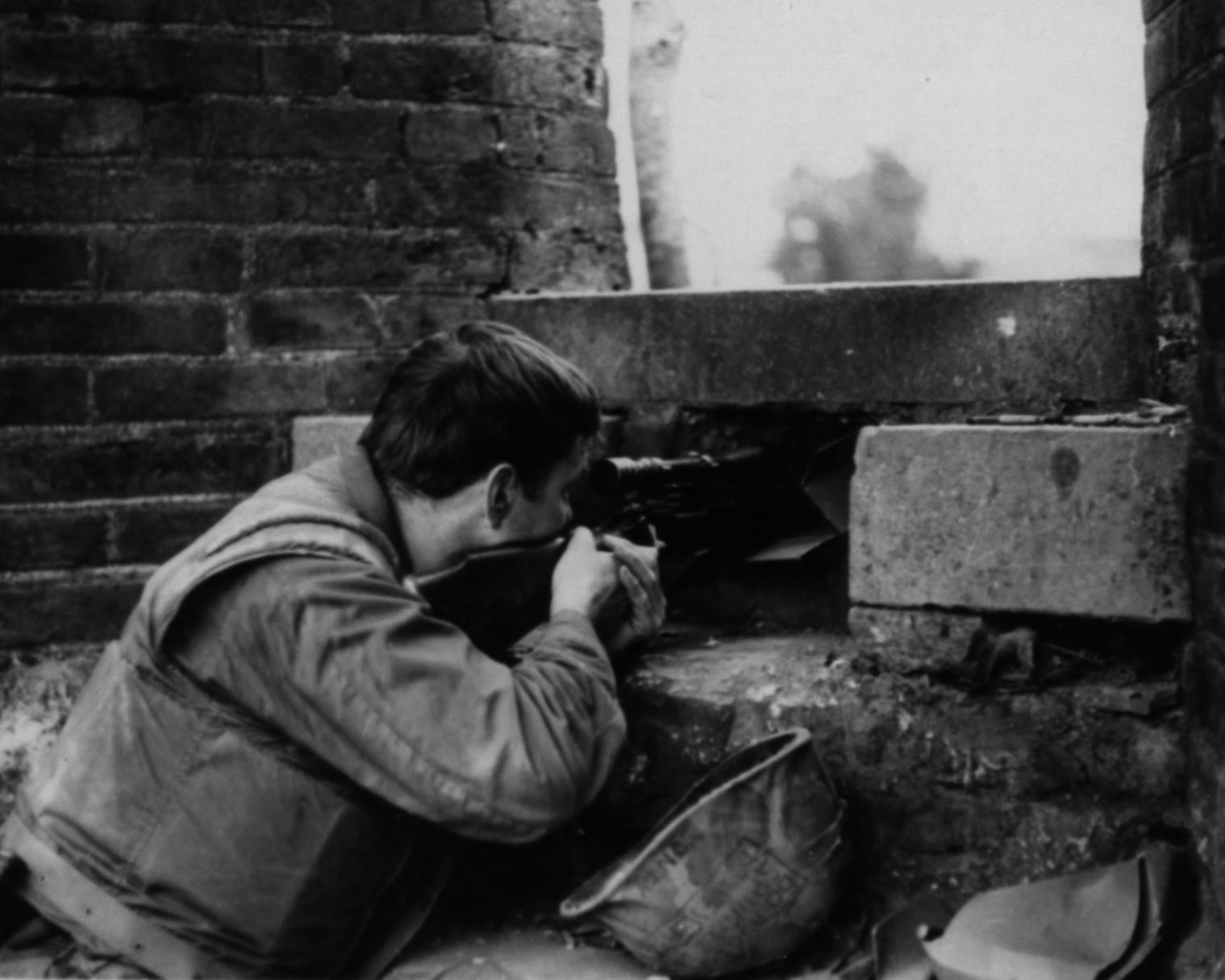
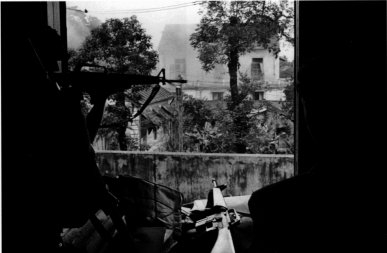
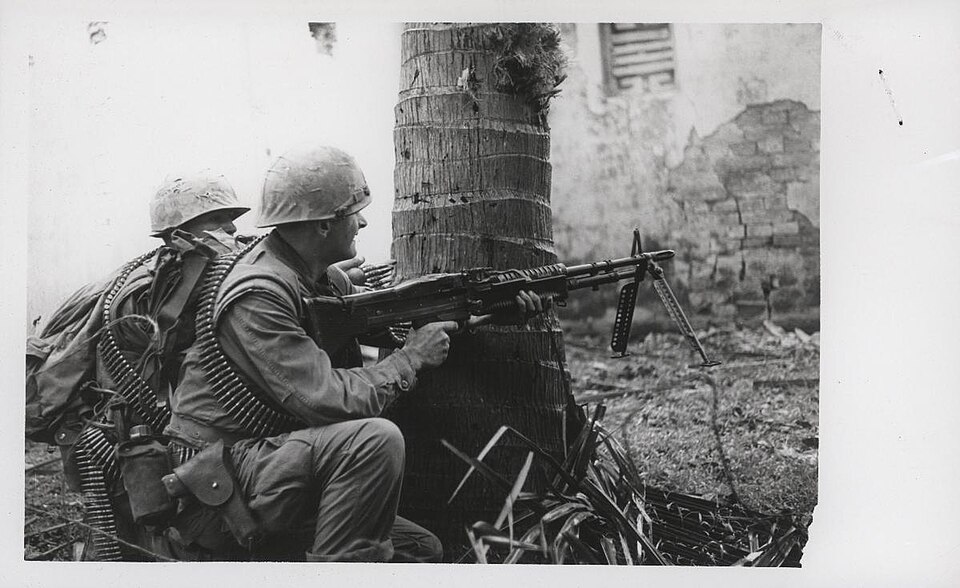
Marine sniper from D Company, 1st Battalion 5th Marines takes aim through a breach in a wall during the Battle of Hue, 22 February 1968
NARA · Hue, 1968

Hue, 1968

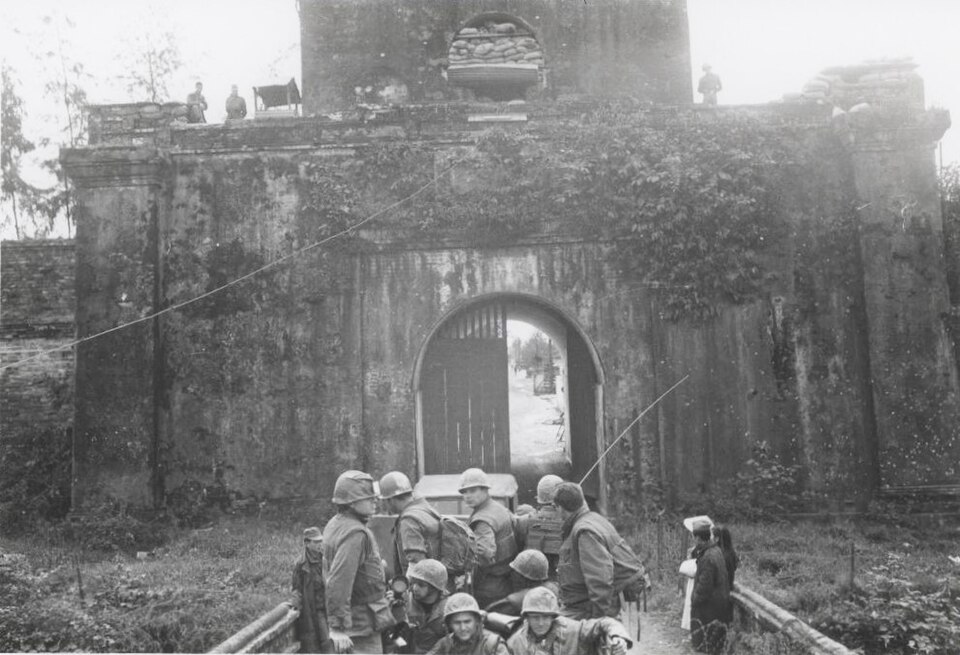
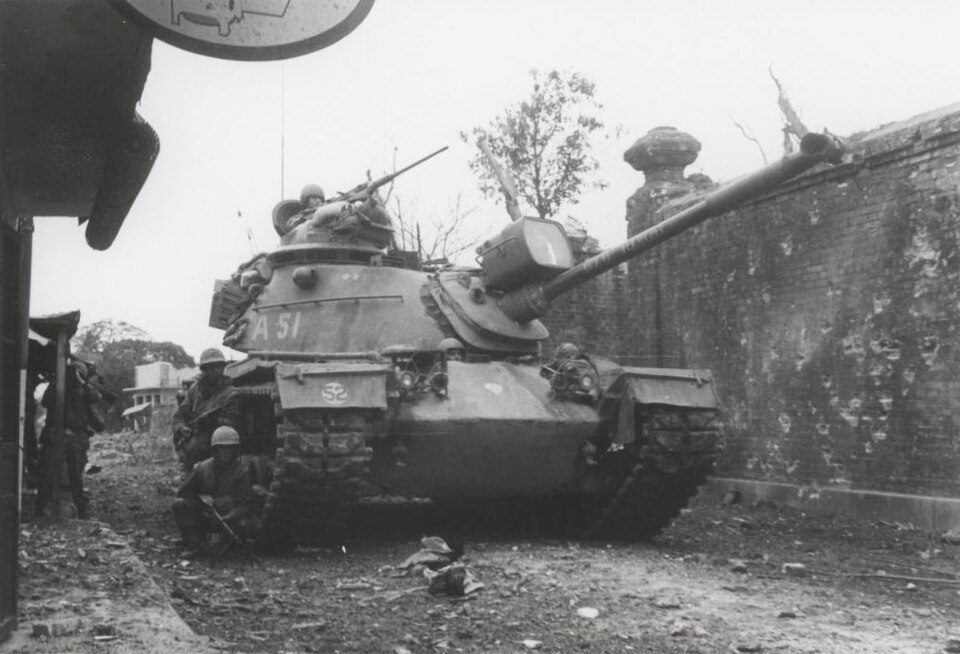
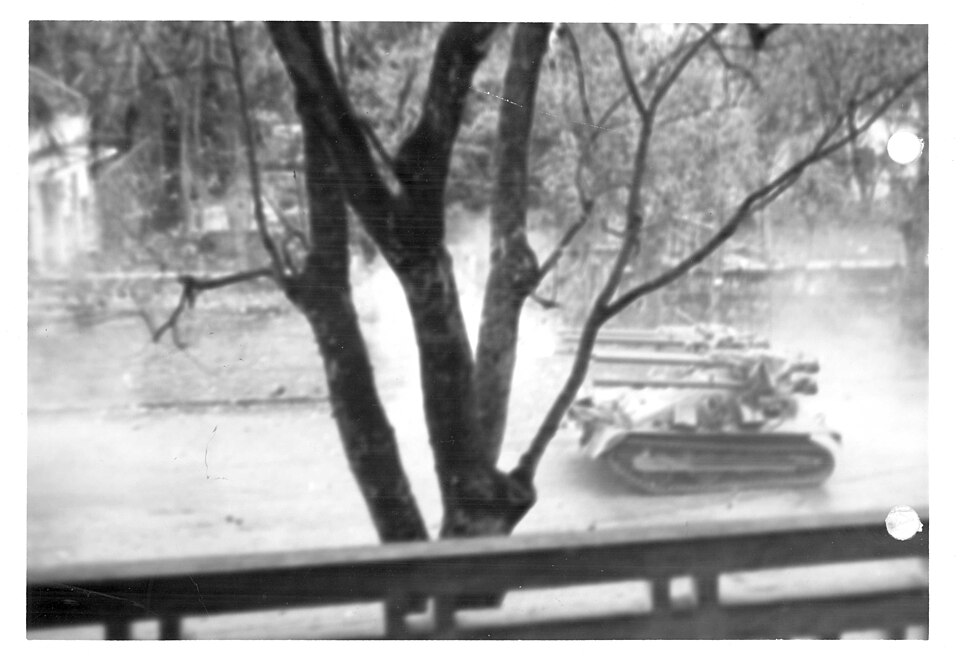
North Vietnamese Army troops entered Hue on the nights of 30–31 January 1968 as part of the Tet Offensive. Many infiltrated undetected through the city’s sewer and drainage system.4 Hue was divided by the Perfume River. South of the river sat the modern city. North of it stood the Citadel, a walled complex of imperial palaces, courtyards, and government buildings dating to the nineteenth century.

The NVA built small bunkers for automatic weapons on the first floors of occupied buildings and placed snipers in the upper stories. Spider holes, each manned by a soldier with an AK-47 and a B-40 RPG, covered the courtyards.23 Most fighting took place at ranges between 25 and 100 meters.4

NVA snipers fired from high positions to draw the Marines’ attention upward. The actual shooters were dug into ground-level positions around the base of the same building. The lesson learned afterward was blunt: “An enemy in urban defense will frequently lure you into committing to an assault by firing from high while his shooters are dug into low positions around a building.”4

On the north side during the Citadel assault, an NVA fighter had dug under a pile of household trash and made a firing position at absolute ground level. A broken bicycle sat on top. A Marine lost a man to the position before the unit found it. The white paper recorded it in seven words: “Never presume an enemy can’t be somewhere.”4

One hundred and forty-two Marines died in the month-long battle to retake Hue. Squad and platoon casualty rates reached 75 percent in the first days.4 On 16 February alone, one battalion counted 63 NVA dead but lost 7 killed and 47 wounded.23

The imperial palace created a problem unique to Hue. NVA snipers fired from inside the royal residence. Vietnamese snipers brought flanking fire from the taller buildings on Gia Hoi Island and from the walls of the imperial palace itself.23 The palace was a no-fire zone. Marines used artillery, naval gunfire, and occasional air strikes to suppress enemy positions on the outer walls of the Citadel, but they could do nothing about the snipers in the palace because of the fire restriction.23 As casualties mounted over the following days, the fire restrictions on supporting arms were lifted.4

The counter-drill the Marines developed was simple. Charlie Company called it fox and hounds.4 One man served as bait, making a short run between cover to draw the sniper’s fire. A badly aimed shot revealed the position, and the cover man engaged it. The technique required accepting that someone would be shot at before the sniper could be located: “Under fire from an unknown sniper position one man will have to serve as target while the other man spots and shoots.”4

The battle ended on 2 March 1968 when Marines and ARVN forces retook the last NVA positions in the Citadel. The sniping ended because the garrison was destroyed, not because any counter-sniper method neutralized it. The fire restrictions that protected the palace snipers were lifted only after the casualties forced the decision.

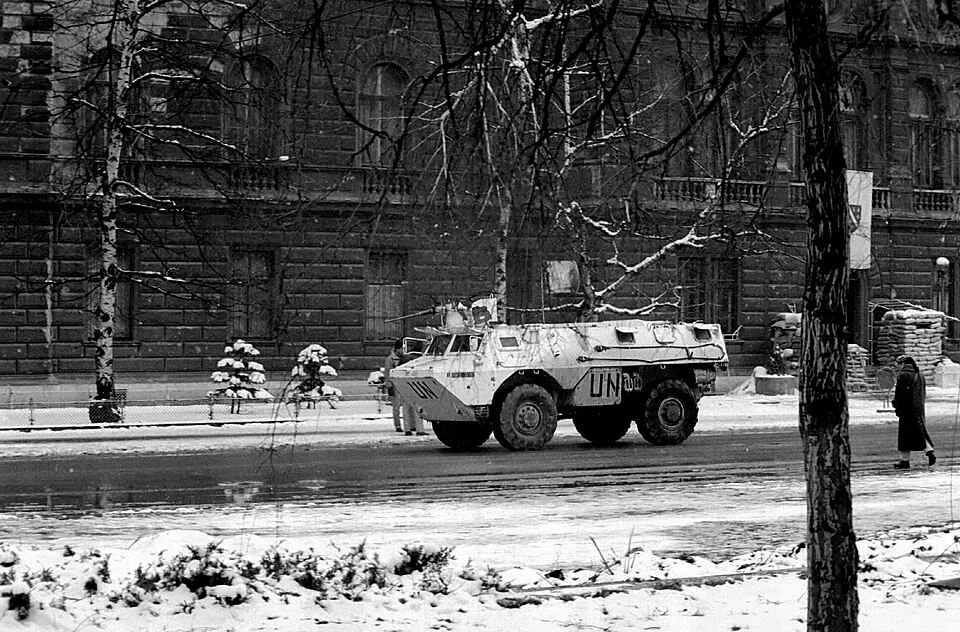
The high/low deception, firing from elevation to fix attention while the killing was done at ground level, reappeared in Iraq and in counter-sniper doctrine published decades later. The fire restriction that protected the palace snipers foreshadowed Sarajevo, where UN rules of engagement limited the response to snipers firing from civilian areas.2

South Armagh, 1990–1997

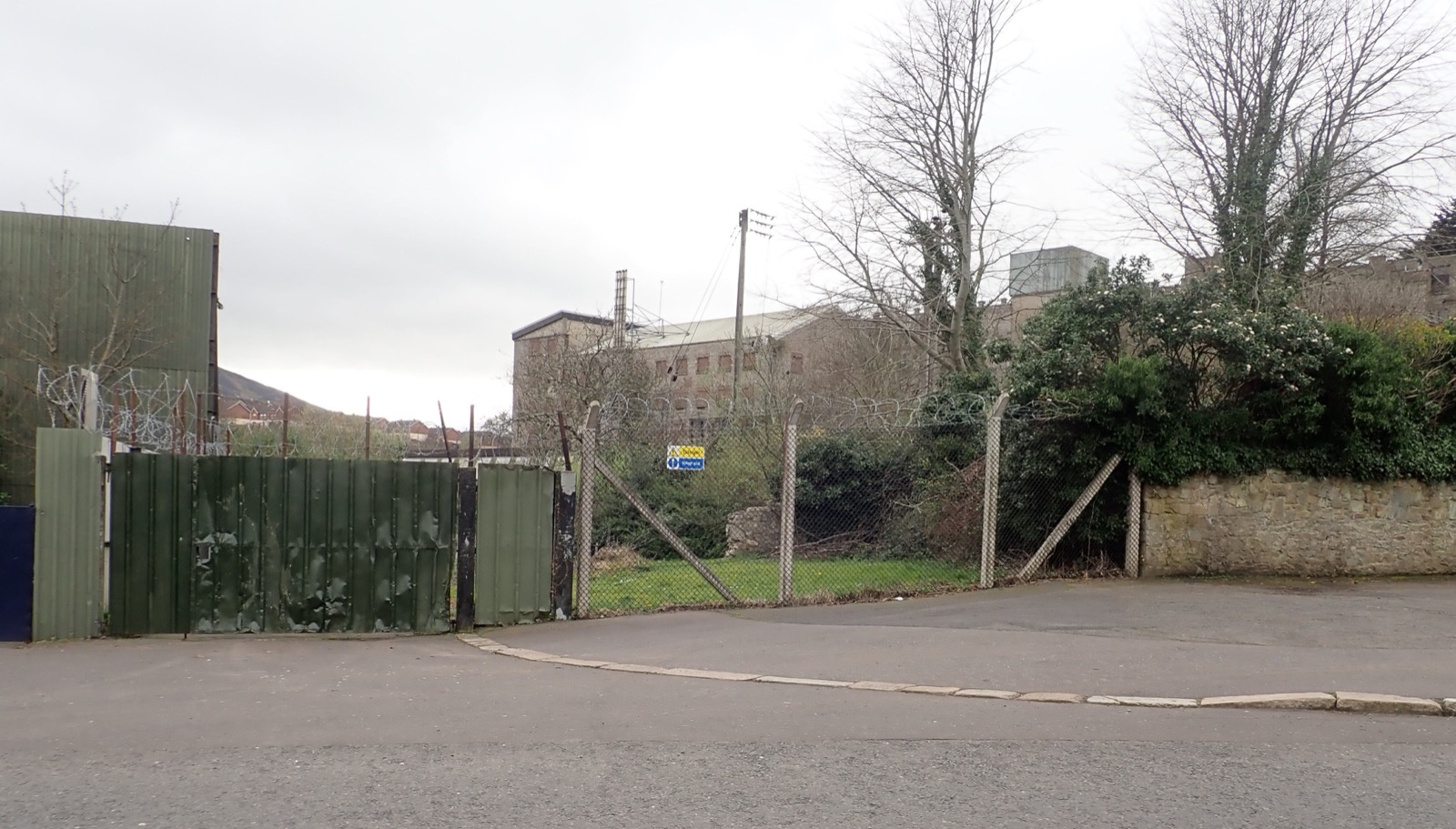
South Armagh sat on the border between Northern Ireland and the Republic of Ireland. Narrow roads ran between high hedgerows and isolated farmsteads, and the British Army could observe the border but not seal it. The IRA had operated in the area since the early 1970s. By 1990, British soldiers moved through South Armagh by helicopter whenever possible, because patrols on the roads drew fire.11

Sean MacStiofain, chief of staff of the Provisional IRA, had developed a one-shot sniping doctrine in 1972. PIRA taught the doctrine in dedicated sniper courses and built it around a two-person team: a trigger man and an observer.2

The South Armagh sniper campaign ran from March 1990 to April 1997. Two teams carried out approximately 24 single-shot attacks over seven years. Nine members of the security forces died: seven British soldiers and two Royal Ulster Constabulary officers.11

Both teams fired a Barrett M82, a .50-caliber semi-automatic rifle procured through American smuggling networks. George Harrison, running a New York-based gunrunning operation, supplied an estimated 2,500 weapons and over one million rounds to the IRA over 25 years.2 Smugglers moved Barrett rifles to Ireland through multiple routes: operatives assembled one from parts at Dublin’s Central Sorting Office in August 1986 after components arrived from Chicago. An IRA member studying at Lehigh University smuggled another from Pennsylvania. Two buyers purchased M90 rifles in Cleveland, Ohio in January 1995.11

For the firing platform, the team modified a Mazda 626 hatchback. They fitted a sliding armored plate in the trunk, with a one-foot-square firing port through which the gunman aimed and fired the Barrett while lying hidden inside the vehicle. A driver in a second vehicle used a CB radio to scout ahead, warning of police checkpoints. The teams operated at ranges under 300 meters.11
The .50-caliber round punched through the body armor and armored Land Rovers that the British Army fielded in South Armagh.11 The sniper team used an anti-materiel rifle, designed for equipment and light vehicles, against personnel at short range from a concealed vehicle. Zaitsev had tested the same idea at Stalingrad with the 14.5mm PTRD-1 forty-eight years earlier.2

Bessbrook, 1997

Lance Bombardier Stephen Restorick of the Royal Horse Artillery was the last British soldier killed in the Troubles. A .50-caliber round struck his rifle at the Bessbrook Mill checkpoint on the Green Road in South Armagh on 12 February 1997. The round fragmented. A fragment passed through his body and killed him.211

The sniper was Michael Caraher, firing a Barrett M90 from the back of the Mazda 626. A civilian driver, Lorraine McElroy, had been stopped at the checkpoint. Caraher fired while Restorick was checking her documents. The team escaped to a rock quarry via a PIRA scout car. They showered and burned their clothing as a counter-forensic measure.2

British intelligence had tracked the sniper team for months before the arrest. Handlers placed hidden cameras at a farm complex near Crossmaglen and attached tracking devices to the Mazda. On 10 April 1997, an SAS unit of sixteen soldiers in two unmarked vehicles, accompanied by RUC officers, arrested four men at a farm near Freeduff. They found the Barrett M90 hidden in the roof of a cattle trailer with three rounds in the magazine and fifty additional .50-caliber rounds.11

Bernard McGinn was sentenced to 490 years for 34 offenses including Restorick’s murder. Michael Caraher received 25 years. Both were released under the terms of the Good Friday Agreement after serving roughly sixteen months.11

The British Army never killed the sniper in the field. No tactical counter-sniper engagement ended the campaign. Intelligence and arrest ended it. A second sniper team, operating from the east side of South Armagh, was never apprehended. Two Barrett rifles remained unaccounted for at the second IRA ceasefire.11

Other shooters adopted two techniques from South Armagh. Muhammad and Malvo fired from inside a modified car in Washington five years later, and insurgents in Baghdad did the same.17 And in Washington, as in South Armagh, no counter-sniper stopped the shooters. A license plate number and a truck blocking an exit led to the arrest.9

Grozny, 1994–2000: the sniper cell

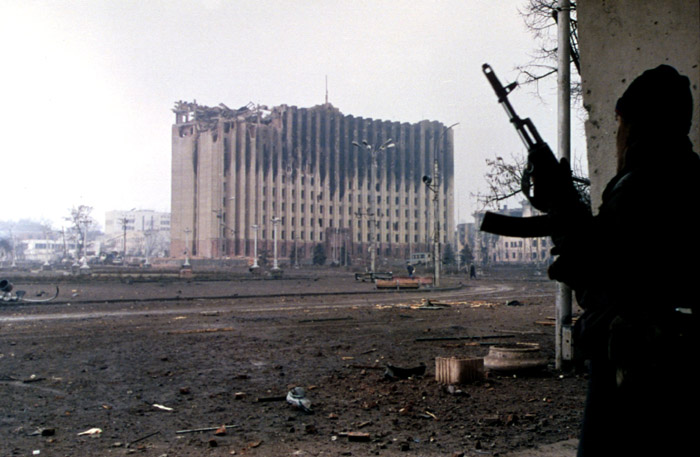
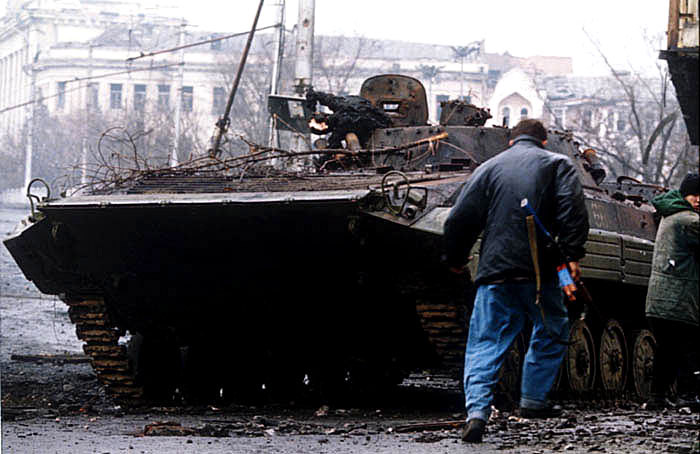
When the Russian military withdrew from Chechnya in 1992, it left behind 533 SVD sniper rifles. Chechen fighters used those Russian-made, Russian-serial-numbered rifles to kill and wound thousands of Russian soldiers from 1994 onward.2

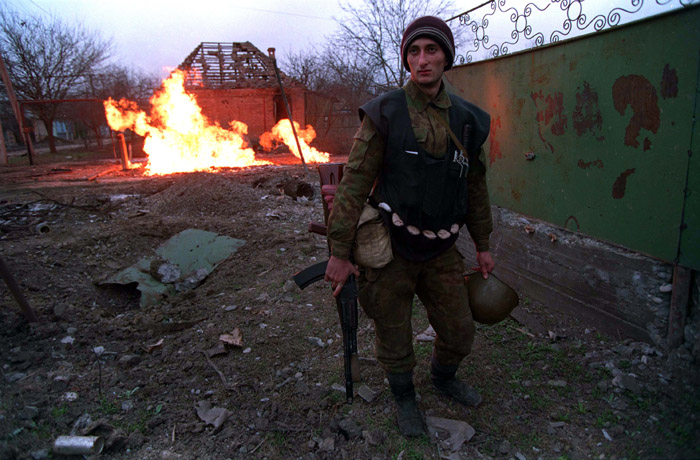
The basic Chechen fighting unit was an eight-man squad with a sniper assigned to it. The Chechens broke this down further into four-man cells: a sniper, a machine gunner, an RPG gunner, and a rifleman. The cell existed to protect the sniper long enough for him to fire and withdraw.23

On the Kirova plateau near Grozny in December 1999, a spotter named Zhelen watched from an attic 1,100 meters from a Russian position. A sniper named Musa lay on the third floor of an adjacent building, looking through the scope of an SVD through the branches of a tree growing past the window.3

A Russian officer stepped out of his vehicle. Zhelen and Musa both recognized the wide red stripes of a general officer on his trousers. Musa compensated for the distance: 15 to 20 centimeters. He fired a single shot and the officer slumped. He fired a second round at the body on the ground.3

The Russian response came within an estimated twenty seconds. Tank rounds struck the third floor, leaving two-meter-diameter holes in the wall. The cell had prepared the exit beforehand: three exterior stairwells leading into a partially destroyed building behind. The team had been in position for only two hours.3

Russian Major General Mikhail Malofeyev was killed by a Chechen sniper on 18 January 2000 while inspecting front lines in Grozny. Russian soldiers could not recover his body for five days because snipers continued to fire on anyone who approached.2

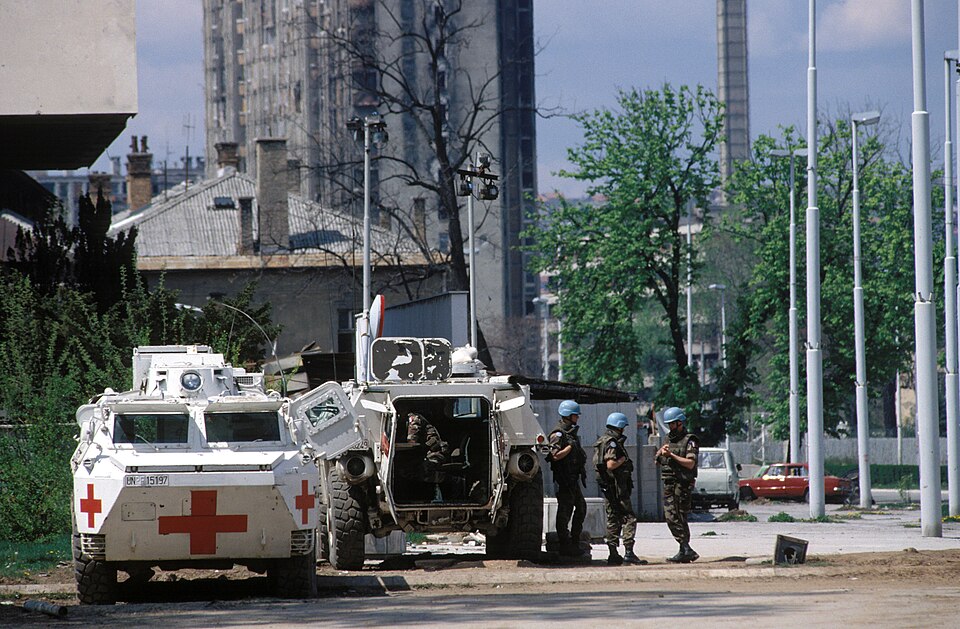
The Holiday Inn and surrounding high-rise towers, Sarajevo, 1996
Hirlimann · Sarajevo, 1996

Sarajevo, 1992–1996

The sniping campaign against the civilian population of Sarajevo lasted 1,395 days, from April 1992 to February 1996. The Sarajevo Romanija Corps of the Army of Republika Srpska, roughly 13,000 troops, encircled the city against approximately 30,000 Bosnian defenders inside it.2

The campaign opened on 6 April 1992. Thousands of Sarajevans had gathered on the main boulevard outside the Parliament building to demonstrate for peace. Across the street, hidden snipers in the bright yellow Holiday Inn opened fire, wounding at least a dozen people. The crowd rushed the building, swarmed inside, and captured three people, one of whom was found in the cellar with a sniper rifle.2

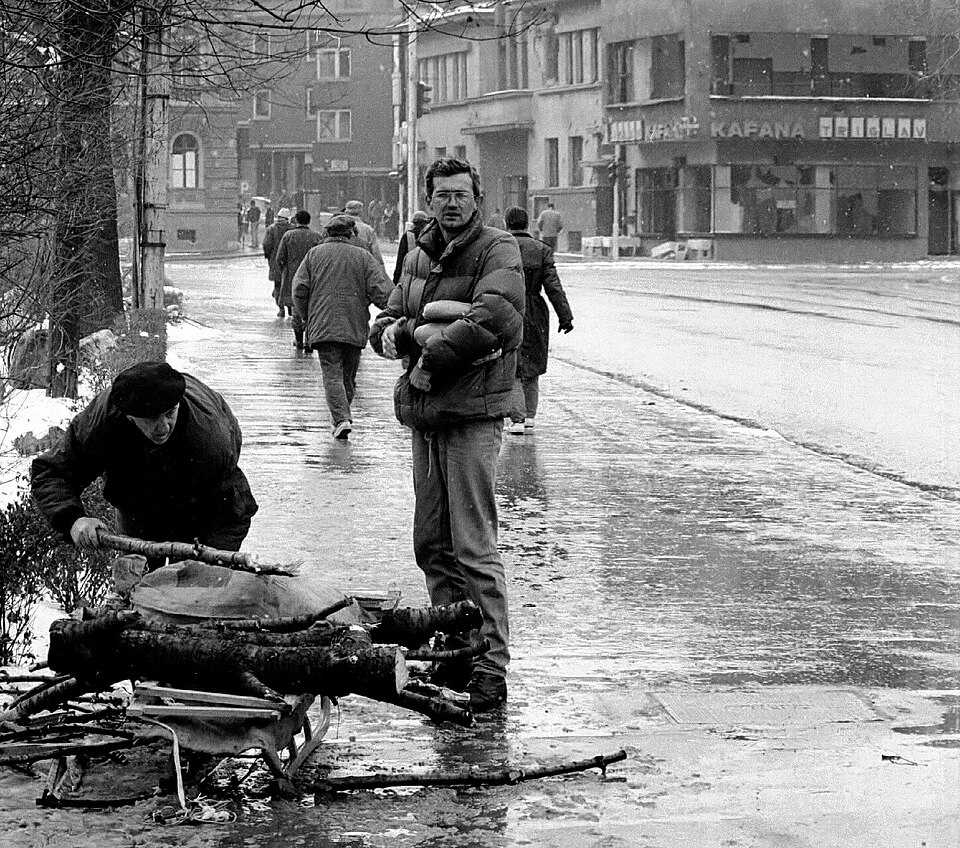
The main thoroughfare became known as Sniper Alley. The boulevard ran east to west along the Zmaja od Bosne street. Tram tracks along the southern edge added to the width of exposed ground. The Miljacka River ran parallel to the boulevard, and anyone crossing it was visible from both banks. Residents cut down the street trees for firewood and removed the last natural cover.2

The ICTY trial chamber heard 171 witnesses and examined 1,268 exhibits over the course of the Galic trial. Civilians were attacked while attending funerals, while in ambulances, trams, and buses, while cycling, while shopping in markets, and while playing in the streets as children. Snipers killed fifteen civilians and wounded over fifty in approximately fifty attacks on trams alone from March 1994 onward. They fired mostly in daylight and not in response to any military threat.10

General Stanislav Galic, commander of the Sarajevo Romanija Corps from September 1992 to August 1994, was convicted of the crime of terror against civilians on 5 December 2003. The trial chamber sentenced him to twenty years. The ICTY Appeals Chamber extended the sentence to life imprisonment on 30 November 2006. The chamber found that the sniping campaign had no discernible military significance and was intended primarily to terrorize the civilian population.10

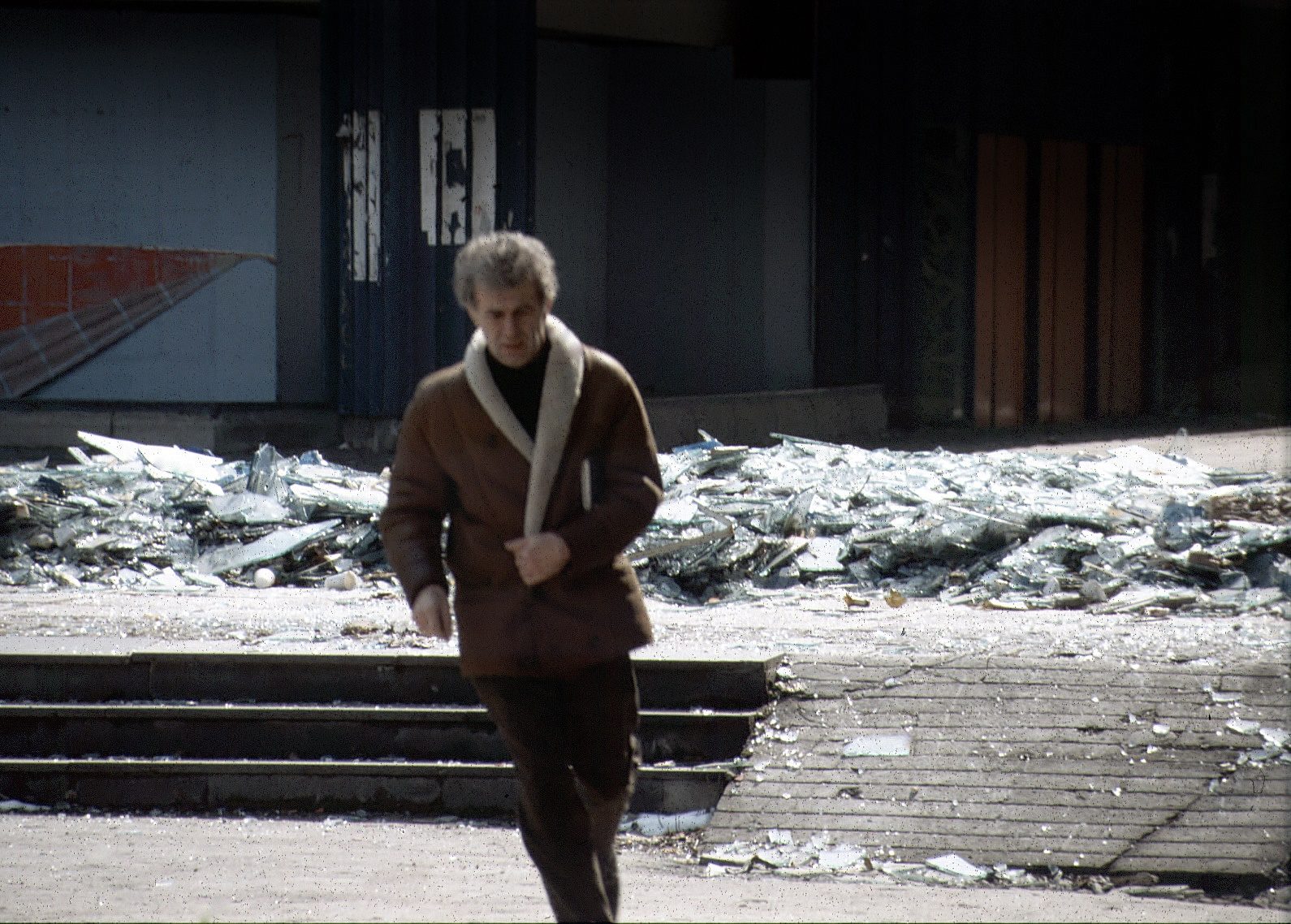
Civilians sprint across an exposed intersection under sniper fire, Sarajevo, 1992
Marechal · Sarajevo, 1993

Under fire

Munira Zametica, 48, went to the Dobrinja river to fetch water on 11 July 1993. She stood behind a bridge that blocked the line of fire. Half a dozen people standing with her hesitated to approach the river bank. When she overcame her hesitation and went to fill her bucket, she was struck by a bullet. Her daughter could not approach because the shooting continued. Zametica was pulled from the water and died in hospital. The trial chamber concluded she was deliberately shot from the area of the Orthodox church in Dobrinja, a known SRK sniper position.10

In September 1993, an eight-year-old girl named Elma and her mother went to collect textbooks from a classmate. They followed a line of steel containers put up to shield pedestrians from SRK snipers on Hrasno Hill. As they emerged from the shelter, a single bullet struck the mother’s thigh, passed through her flesh, and penetrated Elma’s stomach. No bystanders dared to help. The mother crawled from the exposed ground. Both spent almost two weeks in hospital.10

Civilians adapted. Windows were bricked and boarded. Residents dug inter-building trenches, drove at high speed in erratic patterns, ran in zigzag lines across open intersections, and placed concrete blocks at crossings. At one crossing on Kulovica Street, residents hung a piece of the 1984 Olympic closing-ceremony cloth to block sightlines. Pazi! Snajper! (“Watch out! Sniper!”) signs were posted at exposed crossings throughout the city.2

In 1993, diggers from both sides met beneath the airport and completed a tunnel. It ran 800 meters and took up to two hours to transit. Before the tunnel opened, hundreds of people had been shot crossing the open tarmac, sometimes lit by UN floodlights that inadvertently exposed them to Serbian snipers.2

Beirut, 1975–1990

During the Lebanese civil war from 1975 to 1990, local radio stations in Beirut announced the latest sniper activity to residents in the manner of a traffic report. People used the broadcasts to buy groceries, get fuel, and visit relatives without crossing an active lane of fire.2

Marine forces operating in Beirut in the early 1980s relied on snipers to engage enemy snipers who had killed Marines, including officers.6 Marines deployed .50-caliber rifles in Beirut in 1983.2

The Holiday Inn in Beirut was an example of positional overload: a building with hundreds of individual loopholes and sniper ports, from which security forces could not narrow down the exact firing location quickly, if at all.2

No primary-sourced narrative of an individual Beirut sniping incident from 1975 to 1990 exists in the available source material. The positions, the radio broadcasts, and the counter-sniper deployment are documented. The incident-level record is not.

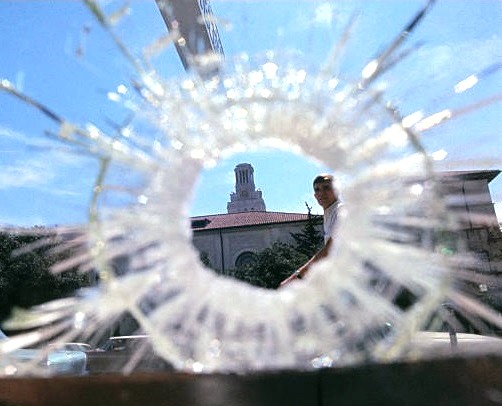
Austin, Texas, 1 August 1966

Charles Joseph Whitman served in the United States Marine Corps from 1959 to 1964. He qualified as a Sharpshooter, the middle of three Marine qualification tiers, scoring 215 out of 250 points.19

Whitman visited the University of Texas tower observation deck as early as April 1966, four months before the attack. He scouted the fields of fire, the security, the elevator route, and the receptionist’s presence. There was no security to speak of.2

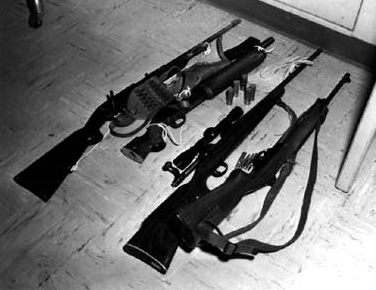
On the morning of 1 August 1966, Whitman purchased a Universal M1 Carbine from a hardware store. He had already assembled six other firearms: a Remington 700 bolt-action in 6mm Remington with a 4-power Leupold scope (his primary weapon), a .35 Remington pump-action rifle, a sawed-off 12-gauge shotgun, a .357 Magnum revolver, a 9mm Luger pistol, and a .25-caliber Galesi-Brescia pistol. He packed approximately 700 rounds, binoculars, water, food, and a portable radio into a footlocker and rolled it on a dolly.20

Wearing coveralls, he rode the elevator to the top floor, killed the receptionist, then killed or wounded four members of a tourist family on the stairway to the observation deck. He barricaded the door and opened fire at 11:48 a.m. from 231 feet above ground.719

Witnesses on the ground mistook the shots for construction nail guns, car backfires, and popping. Buildings with air conditioning running and windows shut blocked the sound entirely. Shots echoed off surrounding buildings, and people could not locate the source. Some hid behind the wrong building.2

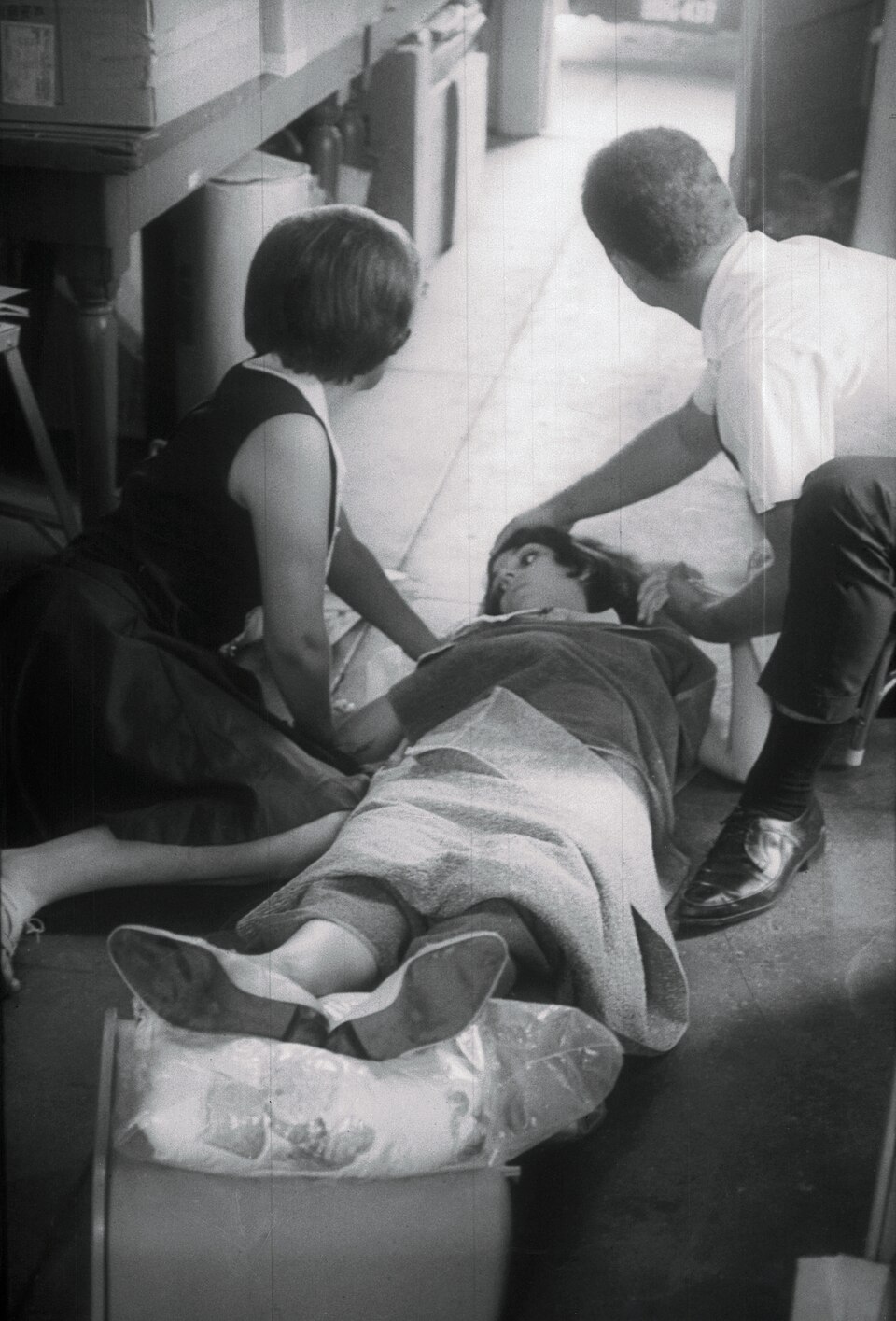
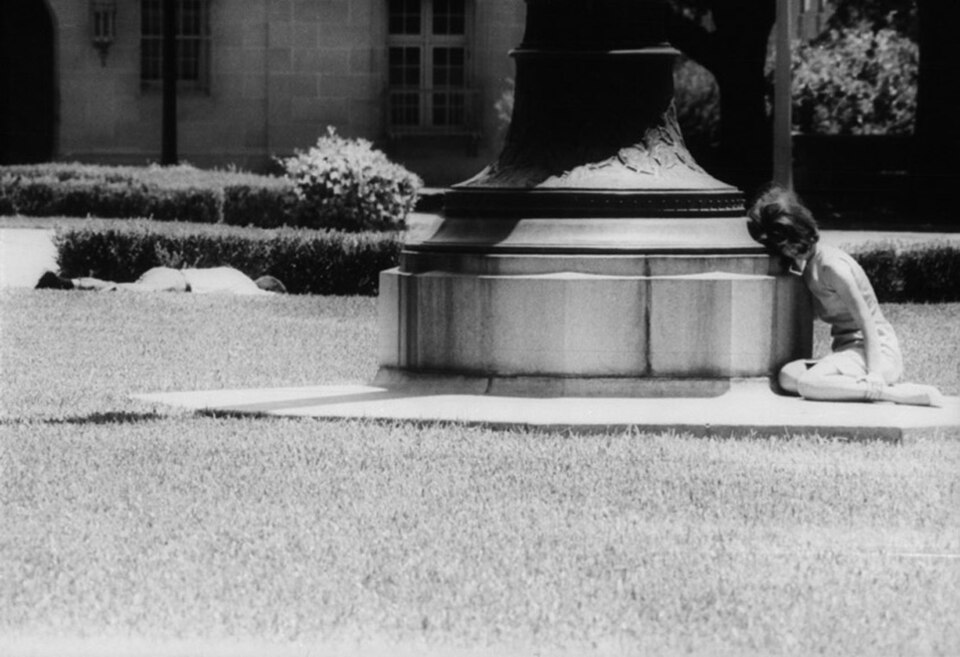
Whitman fired for ninety-six minutes. He killed fifteen people (including an unborn child) and wounded thirty-one. Armed civilians retrieved rifles from their vehicles and nearby shops and returned fire, forcing Whitman to fire through narrow drainage spouts in the parapet wall. Civilians firing from the ground helped pin Whitman down and likely limited the number of victims.719

Officers Ramiro Martinez and Houston McCoy, accompanied by armed civilian Allen Crum, reached the observation deck and killed Whitman at close range at 1:24 p.m. Whitman had lost situational awareness: he was focused on shooting, civilians were returning fire, planes flew overhead, and his portable radio was turned up to full volume.219

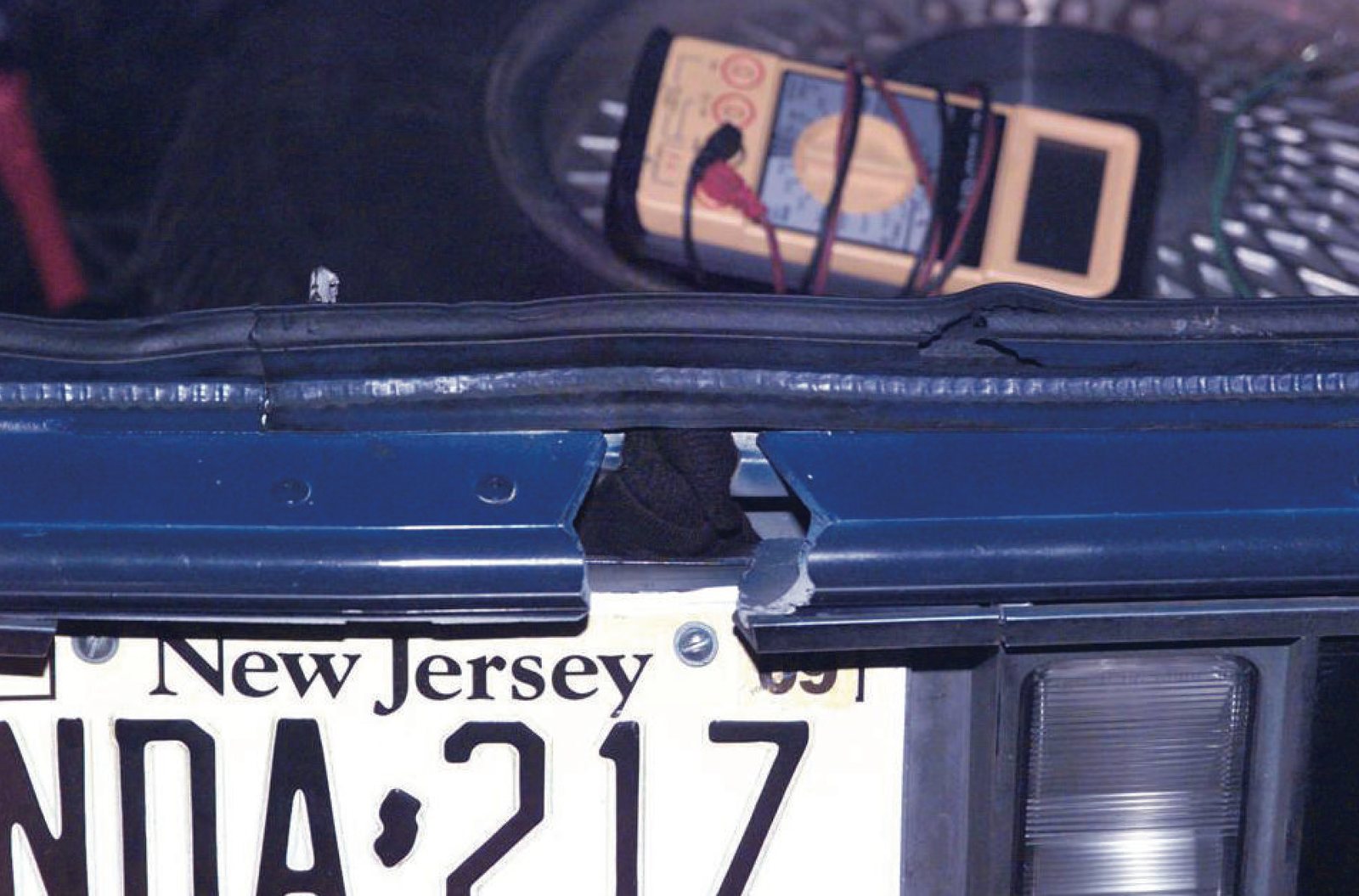
Firing port cut in the trunk lid of the 1990 Chevrolet Caprice used by Muhammad and Malvo
FBI · Washington, 2002

Washington, D.C., 2002: the vehicle platform

John Allen Muhammad enlisted in the United States Army in 1985 and served until 1994, reaching the rank of Sergeant. His military specialty was combat engineer. He was not a trained sniper. He qualified at the Expert level with the M-16, hitting at least 36 of 40 targets at ranges from 50 to 300 meters.2122

The weapon was a Bushmaster XM-15 E2S in .223 caliber, stolen from a gun shop in Tacoma, Washington. It was fitted with a Bushnell holographic sight, a bipod, and a 20-round magazine.28

Muhammad and his seventeen-year-old accomplice Lee Boyd Malvo operated from a 1990 Chevrolet Caprice Classic, purchased for $250. The rear seat sheet metal was removed, allowing the shooter to crawl from the back seat into the trunk. A hole was cut in the trunk lid above the license plate, forming a firing port. The shooter fired through this port while lying inside the trunk. The car had tinted windows.812

A stolen laptop found in the car contained a mapping program installed on 29 September 2002, three days before the first shooting. The program held six maps of the Washington, D.C. region with skull-and-crossbones icons marking locations. One icon over the Home Depot where Linda Franklin was killed was labeled “good one.” A Norfolk, Virginia location was labeled “Good eastern move, many ways out.”13

On 3 October 2002, Muhammad and Malvo killed five people in a fourteen-hour span in Montgomery County, Maryland, overwhelming the capacity of police to coordinate across jurisdictions.2

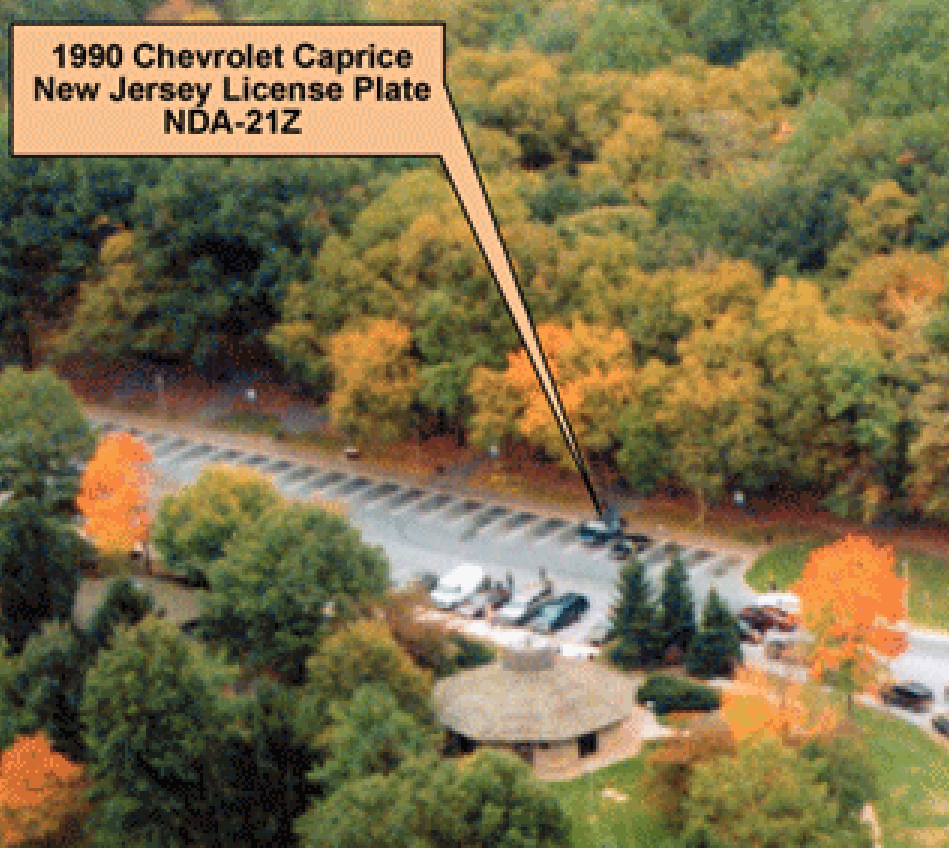
Rest stop off Interstate 70 near Myersville, Maryland where Muhammad and Malvo were arrested, 24 October 2002
Myersville, Maryland

The arrest

Muhammad and Malvo left a tarot Death card in the woods after the 7 October shooting of a thirteen-year-old boy outside Benjamin Tasker Middle School in Bowie, Maryland. Written on the card: “For you mr. Police.” “Code: ‘Call me God.’” “Do not release to the press.”14

Muhammad and Malvo called the sniper tip line at least six times. Operators hung up at least five times, treating the calls as hoaxes. After the 19 October shooting, investigators found a four-page letter on pink paper tacked to a tree behind a Ponderosa restaurant in Ashland, Virginia. In it, Muhammad and Malvo demanded $10 million deposited into a stolen Bank of America Visa account: “Your children are not safe anywhere at any time.”14

Investigators received over 100,000 phone calls and followed 16,000 leads. An early witness reported a white box truck leaving one shooting scene. Police enforced roadblocks seeking white vans and box trucks. The Caprice was spotted at least ten times during the month of killings and stopped at roadblocks at least five times. It was dismissed each time. Prince William County Police Chief Charles Deane said: “This media frenzy of white vans just fed on itself.”15

Malvo left a fingerprinted magazine at one scene. Muhammad left handwritten notes on the tarot card and store-bought stationery, and was caught on the store’s surveillance camera buying it. Malvo’s DNA was recovered from a bag of raisins at a woods hide.2

Robert Holmes, an acquaintance of Muhammad from Tacoma, Washington, called the tip line. He was one of roughly 80,000 erroneous or redundant leads. Once police had two names, they identified the Caprice within twenty-four hours.2

Whitney Donahue, a refrigerator mechanic, spotted the Caprice at a rest stop off Interstate 70 near Myersville, Maryland in the early hours of 24 October 2002. He had written down the license plate number after hearing it announced on the radio. Ron Lantz, a 61-year-old trucker at the same rest stop, blocked the exit with his rig.916 At 3:19 a.m., a SWAT team broke the car windows and threw in stun grenades. Muhammad and Malvo were asleep inside.12

The pattern

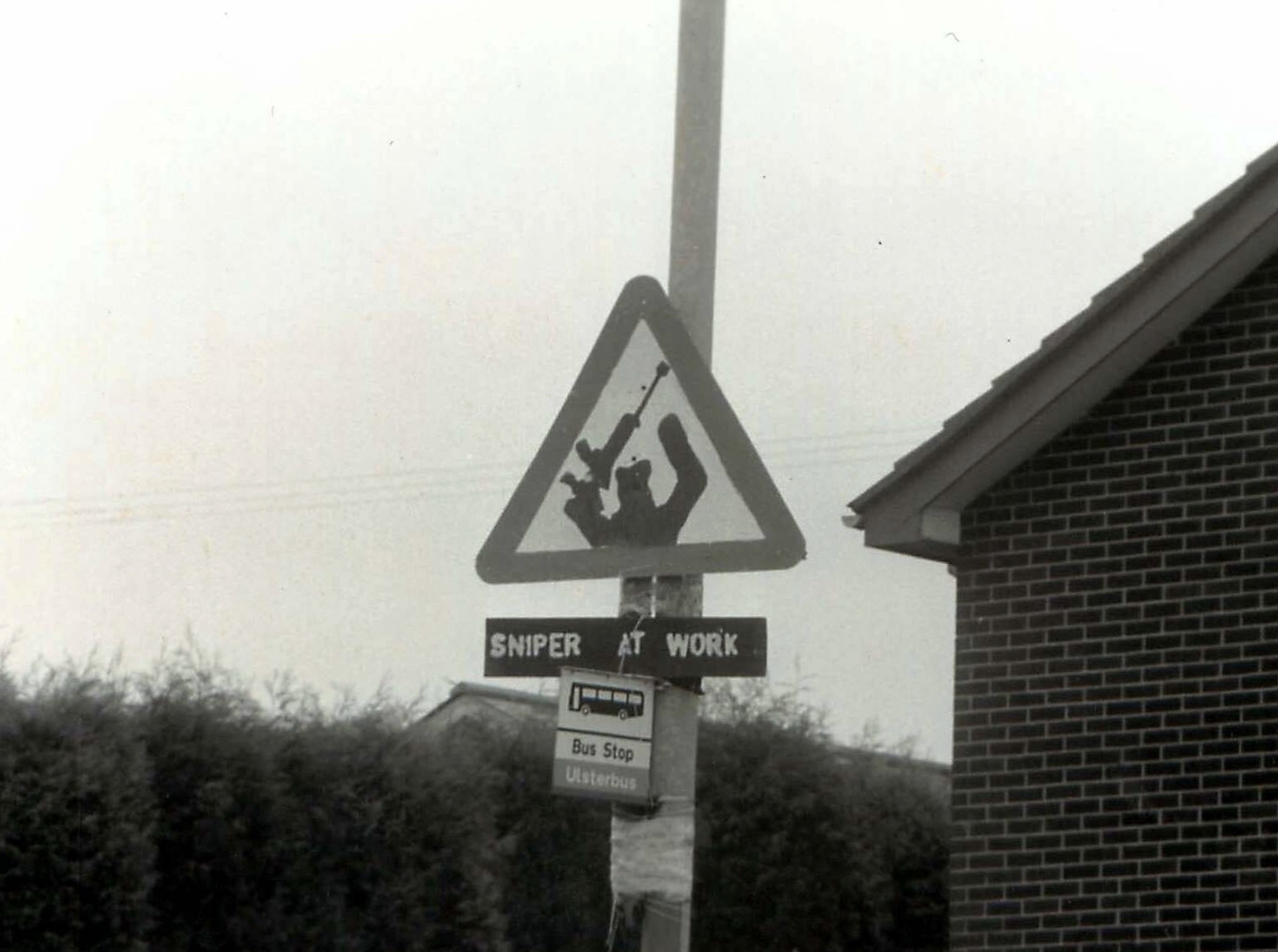
In Beirut, radio stations broadcast sniper locations like traffic reports so that residents could avoid exposed crossings.2 In Sarajevo, residents posted Pazi! Snajper! signs at dangerous intersections and erected steel containers and fabric screens to block sightlines.2 In South Armagh, the IRA erected triangular road signs reading “Sniper At Work” near Crossmaglen.11

The three populations had no contact with each other. No source connects these warning systems as deliberate imitation.

Two teams, a decade apart, fired from inside modified cars. The PIRA sniper team fired from the back of a Mazda 626 in South Armagh from 1990 to 1997.2 Muhammad and Malvo fired through a port cut in the trunk of a Caprice in 2002.8 Malvo claimed Muhammad got the idea from an alleged IRA training manual, though no such manual has been located.2 No evidence of a direct link between the two vehicles was found.17

The Germans brought their own snipers to Stalingrad after hundreds of soldiers died from Russian fire.5 The Marines at Hue developed the bait-man counter-drill on the ground.4 Russia formed four sniper companies of roughly sixty men each for Grozny.5 Bosnian counter-snipers operated from the 30-story Parliament building in Sarajevo, rotating positions every 24 hours.2

Whitman was killed by police officers who reached his position on foot.7 Muhammad and Malvo were identified through a tip-line call and arrested while sleeping in the Caprice.12 Police ended both shootings through forensic investigation, not counter-fire.

“a police officer could be only yards away from the shooting, and then the shooter himself be questioned, but then escape?”

West, Fry the Brain, 2008

On Muhammad and Malvo passing through police roadblocks during the D.C. sniper attacks2

Engagement range

Maximum documented firing distance per case

Washington
~91 m
Hue
~100 m
Baghdad
300 m
S. Armagh
<300 m
Grozny
400 m
Austin
~457 m
Sarajevo
500 m
0100200300400500 m
Military Guerrilla Non-military

Most documented urban sniping engagements occurred at less than 300 meters.245 Austin was the outlier: Whitman fired from an elevated position with no obstructions.7

Editorial

Stalingrad and Hue were battlefields. The snipers on both sides operated inside a war, against military targets, under military command. The ground they fought on was already destroyed. There were no police, no witnesses who would be interviewed, no courts that would reconstruct what happened.

Belfast, Sarajevo, Beirut, Austin, and Washington were not battlefields. Those cities had police forces, property registers, neighbors who remembered what they saw, and courts that prosecuted what they found. Snipers used the same method on different ground and met a different ending.

That distinction is where segment two begins.

Segment one sources

Vault sources are held in the operator’s research library. Web sources were verified at the URLs listed. Commercially published books are cited, not quoted at length. Vault material is used with credit under the operator’s license.

  1. 1 Plaster, The Ultimate Sniper: An Advanced Training Manual for Military and Police Snipers (edition in vault references Iraq-era operations). Urban operations chapter, pp. 443–444.
  2. 2 West, Fry the Brain: The Art of Urban Sniping and its Role in Modern Guerrilla Warfare, 2008. Chapters 2, 5, 7, 10, 11, 13, 14, 15, 19.
  3. 3 Fangs of the Lone Wolf: Chechen Tactics in the Russian-Chechen Wars, Marine Corps University Press. Vignettes 10–11, Conclusions chapter.
  4. 4 Lessons Learned, Operation Hue City (Vietnam, 1968). White paper, Charlie Company 1/5, copyright 2001. 739 lines.
  5. 5 Dearolph, Enemy Inside the Gates: Snipers in Support of Military Operations on Urbanized Terrain, School of Advanced Military Studies, 2002. Citing Brookesmith, Sniper: Training, Techniques, and Weapons, 2000.
  6. 6 Dearolph, 2002. Citing Gilbert, Stalk and Kill: The Sniper Experience, 1997, pp. 209–216.
  7. 7 Texas State Historical Association, “University of Texas Tower Shooting (1966),” Handbook of Texas. tshaonline.org.
  8. 8 CBS News, “Car A Star Witness In Sniper Case,” 10 November 2003.
  9. 9 Deseret News, “Trucker a hero in sniper arrests,” 2002.
  10. 10 ICTY Trial Chamber I, Summary of Judgement: Prosecutor v. Stanislav Galic, 5 December 2003. Case No. IT-98-29-T.
  11. 11 “South Armagh sniper,” Wikipedia, citing Harnden, Bandit Country: The IRA and South Armagh, 1999; Urban, Big Boys’ Rules, 1992; Oppenheimer, IRA: The Bombs and the Bullets, 2009. Cross-referenced with Cusack, “IRA sniper unit killed 11 soldiers and police in Armagh,” Irish Times, 12 April 1997.
  12. 12 “D.C. sniper attacks,” Wikipedia, citing contemporaneous reporting. Cross-referenced with FBI case records and trial coverage.
  13. 13 Baltimore Sun, “Laptop map shows trail of sniper scenes,” 6 November 2003. FBI cybercrimes testimony, Muhammad trial.
  14. 14 Baltimore Sun, “Detailing what the sniper had left behind,” 1 November 2003. CBS News, “Sniper Note: Call Me God,” 2002.
  15. 15 WTOP, “The futile search for a white van in shootings,” October 2012. NLEOMF, “The Beltway Sniper Case: Interoperability and Evidence Gathering.”
  16. 16 Police1, “Retired trooper recalls capture of DC snipers 10 years ago at Md. rest stop,” 2012. ABC News, “First Man to Spot Sniper Suspect’s Car.”
  17. 17 ABC News (Andrew Chang), “IRA Terrorists Had Car Like Beltway Sniper,” 6 January 2006.
  18. 18 Grossman, A Writer at War (ed. Beevor and Vinogradova). Wartime notebooks, “The Stalingrad Academy.” Wikipedia, “Nikolai Ilyin (sniper),” citing TsAMO archives.
  19. 19 “Charles Whitman,” Wikipedia, citing Lavergne, A Sniper in the Tower: The Charles Whitman Murders, 1997. Cross-referenced with AP wire (1966) and Texas Tribune.
  20. 20 “Charles Whitman police report,” Wikisource. Transcription of Austin Police Department evidence inventory, 1 August 1966.
  21. 21 Fox News, “Muhammad Had 17-Year Army Career,” citing Pentagon sources.
  22. 22 ABC News, “Muhammad Is Gulf War Vet, Expert Marksman.” VOA, “Sniper Suspect is Former Army Expert Marksman,” 24 October 2002.
  23. 23 Camp, Death in the Imperial City: U.S. Marines in the Battle for Hue, 31 January to 2 March 1968, Marines in the Vietnam War Commemorative Series, History Division, Marine Corps University, 2018. Federal work.