Cell triage bench
A salvaged 18650 is an unknown until you prove it. Report what you see and measure, and the bench returns a verdict: keep, suspect, or discard. A cell that fails any one check is discarded.
Report the cell
1 · Appearance
Look over the whole can and the wrapper.
2 · Resting voltage
Read it with your multimeter, off any charger.
3 · Self-discharge
Charge it, leave it a few days, read it again.
Verdict
Report the cell
Answer the three questions and the verdict appears here.
Rules: inspection, self-discharge, and 3.6 V storage from the 18650 salvage guide; over-discharge and spot-weld from the battery sources.
What salvage looks like
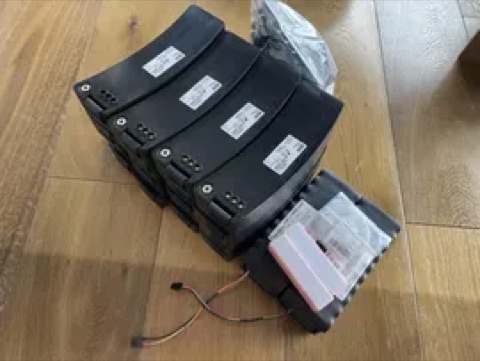
Used packs are the source: laptops, power banks, medical packs.18650 salvage guide
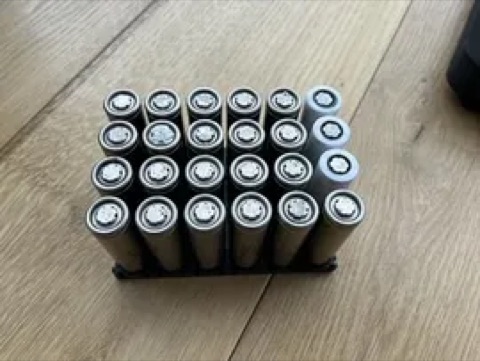
Bare cells pulled from a pack, terminals up, ready to inspect.18650 salvage guide
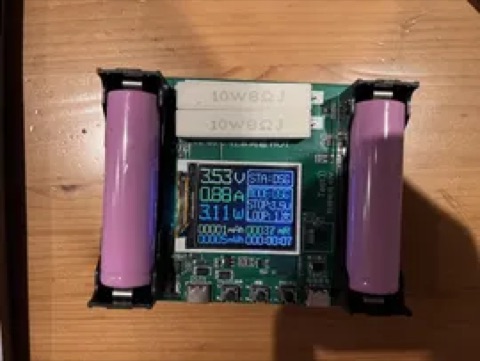
A capacity tester reads each cell so you can label and group it.18650 salvage guide
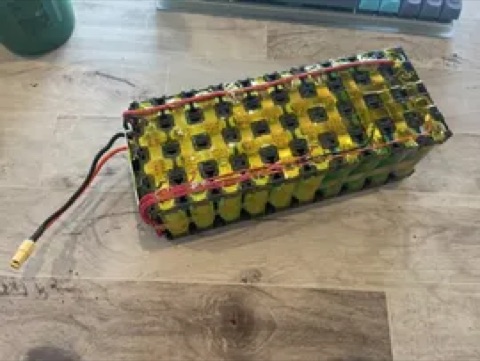
Tested cells rebuilt into a pack, joined by spot-welded nickel strip.18650 salvage guide
Counterfeit check
Counterfeit 18650s are everywhere. The tell is simple, so check both boxes honestly against a real name-brand cell.
Buy name brands only. As of 2026 the current high-drain picks are the Molicel P28A and P30B. The older Samsung 30Q, Sony VTC6, and LG HG2 are still common and are the most-counterfeited cells on the market, so a price below the name brand is the strongest indication of a counterfeit.