LFM

Pi Zero 2 W

The Raspberry Pi Zero 2 W is a full Linux computer at 65 by 30 mm, and it is the controller for every build in this module. Click any numbered marker to see each component and the job it does here.
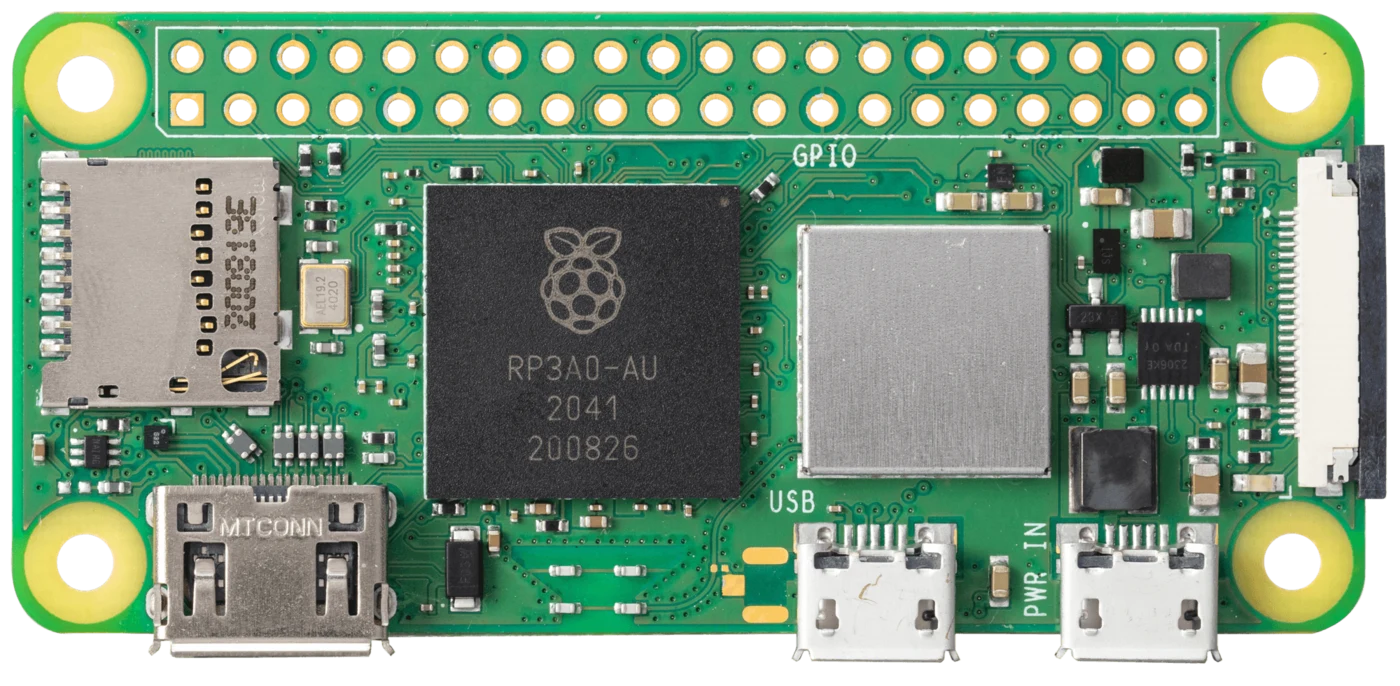
Raspberry Pi Zero 2 W board seen flat from above: unpopulated 40-pin GPIO holes along the top, microSD and mini-HDMI on the left, RP3A0 processor center, wireless shield beside it, USB and PWR IN micro-USB ports at the bottom, camera connector on the right edge
The board

Raspberry Pi Zero 2 W

65 x 30 mm · quad-core · 512MB · runs the same OS as the Pi 5

This is the same kind of machine as your Module 01 node, shrunk to a 65 by 30 mm board. It runs Raspberry Pi OS Lite headless, and you reach it the same way: SSH over your own network. Click a marker to explore it.

Board photograph from the Raspberry Pi documentation (raspberrypi.com), CC BY-SA 4.0.

The node from Module 01 stays racked at home. The Zero 2 W is the opposite kind of machine: small, cheap, low-power, and meant to sit somewhere else. The same OS and the same commands run on both, which is why everything you learned on the node carries over.

Pi 5 · the nodeZero 2 W · dolos
Size85 × 56 mm65 × 30 mm
ProcessorQuad-core A76 @ 2.4 GHzQuad-core A53 @ 1 GHz
Memory2 to 16 GB512 MB
Power in27 W USB-C supply5 V micro-USB, a few watts
NetworkGigabit Ethernet + WiFi2.4 GHz WiFi only
JobRuns the services, stays homeRuns one task, goes places
Why the low power matters. A machine that sips a few watts can live on a battery. That is the whole point of Build 2's portable pack, and it is what makes a remotely deployed sensor possible at all. The node could never run on a 450 mAh cell; this board can.

Two components grow this board from a bench controller into a field device. Both mount on the board you are holding, and both come later in the series.
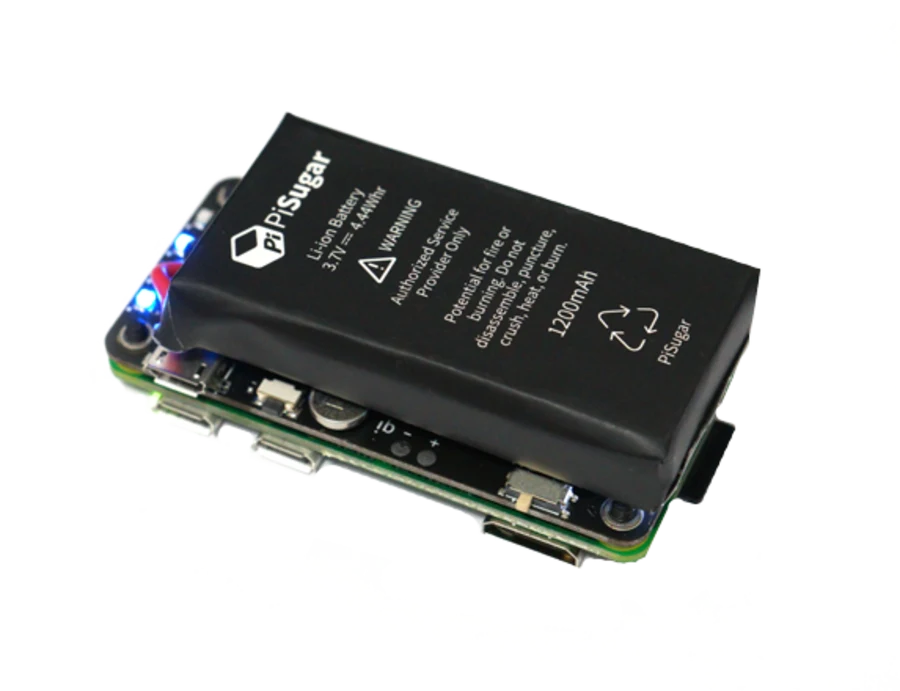
PiSugar battery board mounted under a Pi Zero, its 1200 mAh lithium cell on top
PiSugar battery board Zero-sized · mounts under the board on pogo pins · charge and run at once A commercial battery supply built to the Zero's own footprint. Build 2's pack, the TP4056 and SX1308 chain you wired yourself, does the same job; this is the packaged version of the circuit you already understand, for when the build has to be compact and repeatable.
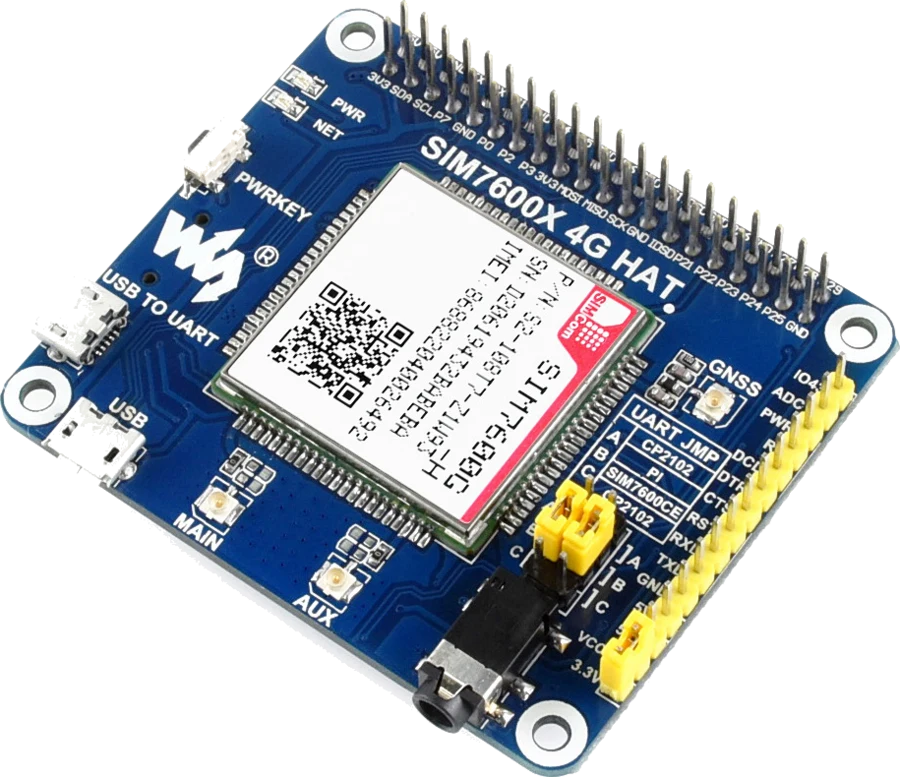
Waveshare SIM7600X 4G HAT carrying the SIM7600G-H module, with LTE and GNSS antenna connectors and the 40-pin header
Waveshare SIM7600G-H 4G HAT LTE Cat-4, global bands · GNSS built in · SMS fallback · rides the 40-pin header The radio that takes the board off your LAN. With a data SIM it reaches your Module 01 mesh from anywhere with cell coverage, and its GNSS gives the board position and time with no network at all. Powering and enrolling it is a later module; it is also why the power budget grows past one small cell.

PiSugar photograph: PiSugar. HAT photograph: Waveshare product image.